Gary Hall
All Saints, Beverly Hills
May 3, 2026 [5 Easter]
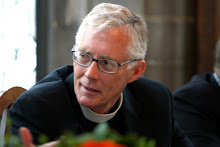
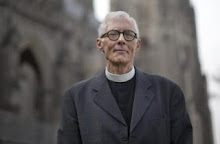
When I announced my retirement from Washington National Cathedral in 2016, people started asking me what I was going to do next. Having no real idea, I began telling them that I planned to start what I was calling the “Gary Hall Institute” or, in shorthand, the “GHI”. This, of course, was a joke, and I began posting pictures of dilapidated buildings on Facebook with captions like “Future Home of the Gary Hall Institute”. I even came up with a couple of slogans. My first, and favorite was: The Gary Hall Institute, where Excellence is Outstanding. The second is a particular favorite of Bishop Taylor’s: The Gary Hall Institute, applying today’s solutions to tomorrow’s problems.
Though this was all in fun, for some people it was a little too convincing. A couple of friends wrote me during this period to tell me that they had looked up the GHI online to make a donation and couldn’t find it anywhere. Could they send me a check?
So I found myself a leader without a movement. In these Sundays after Easter, we find a group of disciples longing for a leader. How’s that for a segue?
Because I have talked mostly about the Gospel readings each Sunday in Easter season, I haven’t said anything about the weekly Acts readings, but they tell a compelling story. Week after week we discover this new Christian community becoming empowered to do the works Jesus performed—especially healing. On this fifth Sunday we discover that this new community also encounters the same kind of resistance that Jesus did. Today we hear about the stoning of Stephen, the first Christian martyr: “Then they dragged him out of the city and began to stone him.” Just as the people had turned on Jesus, so they now begin to attack his followers.
This incident reminds us that you and I continue the work of Jesus in the world and we should be surprised by neither the grace we experience nor by the resistance we encounter. It is Jesus himself who says this in today’s Gospel:
Very truly, I tell you, the one who believes in me will also do the works that I do and, in fact, will do greater works than these, because I am going to the Father.
In life, Jesus taught, healed, and forgave. His resurrection has now transferred those ministries to us, his followers. None of us individually but all of us together are Jesus in the here and now. That is why our behavior, our standards, the way we treat each other matters. Jesus’s reputation is tied up with you and me. The world will find him credible to the extent that it finds us credible.
This deepened understanding of the holiness of our calling sets the stage for what Jesus says to his companions in the 14th chapter of John’s Gospel. “In my Father’s house there are many dwelling places.” “I am the way, and the truth, and the life.” These are lines we regularly hear read at funerals. They speak powerfully to our hopes about life beyond death with God in Christ. But they also speak directly to us about our lives with God and each other now.
Most of us talk about our spiritual journeys as if they are something we ourselves have undertaken. “I started out in one place, went to another, and ended up here.” When Jesus calls himself “the way” he’s reminding us of how those journeys actually work. God is the author our spiritual journeys. It is God who is doing the work, not us. We were lost, and God came to find us. God comes toward us first in Jesus and now in the church. That’s what Jesus means when he calls himself the way, the truth, and the life.
But even if God is the prime actor in our spiritual journeys, you and I still have work to do. I remember hearing a poet address an audience on the subject of keeping regular work hours. “If you expect the Muse to find you,” she said, “it’s a good idea to show up regularly at a time and place where you can be found.” The same might be said of the spiritual life. People who call themselves “spiritual but not religious” are probably neither. The rites and rituals we Christians and other people of faith have developed—prayer, Bible reading, going to church—are not efforts to get God’s attention; they are God’s methods to get ours. Spirituality is really about paying attention, and it is we, not God, who have trouble focusing. If you want to be open to what God is doing in your life, you have to put yourself regularly in a place where you can attend to what God, who speaks to us most authentically in Word and Sacrament, might have to say. Going for a walk on the golf course or in the woods is a fine thing to do, but it is not anything like a serious way to be spiritual.
The same can be said of Jesus’s remark about the “many dwelling places”. The Christian life is certainly one of action, but it is also a life of rest. Here and elsewhere in John’s Gospel, Jesus uses the word we translate, “abide”. Following Jesus means not only doing good works in his name. It also means abiding, resting, dwelling in the assurance of his love. Running around doing charitable deeds in a kind of workaholic frenzy is not really living the Christian life. We’re not doing it fully if we we’re not also abiding, dwelling, resting in God’s love.
As the Easter season draws to a close, we are nearing a couple of big events in the life of Jesus and his community. On Ascension Day, May 14th, the 40th day after Easter, Jesus ascends to the Father. On Pentecost, 10 days later, the Holy Spirit arrives. It is important for us to put ourselves in the place of Jesus’s earthly companions, the ones who first lost Jesus on Good Friday, then got him back at Easter, and have now spent these succeeding weeks basking in his presence. As Jesus reminds them and us this week and next, he will soon return to the source of his and our being. With his forthcoming absence, what will become of us? The answer arrives in a dramatic way at Pentecost: God’s journey towards us is completed as God’s spirit now permanently resides in and among us.
Jesus is soon to be drawn back up into God’s divine life, as one day we will also be. God and Christ are giving God’s abiding spirit to you and me so we may become the living body of Christ in the world. Yes, Jesus is the way, the truth, and the life. He is the way God and we meet each other. He is the truth, the human face of God and the divine face of humanity. He is the life, the one who has prepared a dwelling place for us where together we do and will abide. Jesus is among us now and calls to live eternally in his presence.
I’m sorry to say that the church is not the Gary Hall Institute. Neither is it the Andy Barnett or Carol Anderson Institute. The church is the living body of Christ alive and at work in the world. And you are a precious, vital, and beloved member of it today and always. Amen

No comments:
Post a Comment