Monday, January 8, 2024

Homily: The Third Sunday of Advent [December 17, 2023] Church of the Heavenly Rest, New York City

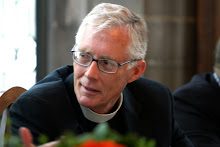
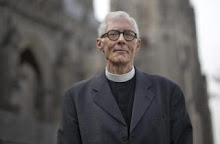
I am so grateful to Bob Dannals for extending the invitation to be with you this morning. My name is Gary Hall, and I am a retired priest who can’t seem to stop working. I served in my time parish rector, seminary professor and dean, and finally Dean of Washington National Cathedral. My wife Kathy and I live in my home town of Los Angeles now, and so I deeply appreciate Judi Counts’ yearly invitation to spend December as priest in residence at the House of the Redeemer five blocks north of here on 95th St, a few doors east of Fifth Avenue. If you don’t know the House of the Redeemer, check it out. We offer services at 8 am and 5:30 pm five days a week, and also serve as a retreat house and conference center. The place is a gem, and I’m proud to be associated with it. Please come to one of our services or check us out online.

I had a kind of a shock a few days ago. Upon coming out of a room into a hallway, I saw an open door with a frail looking old man looking back at me. I paused to let him exit his door first, but he didn’t move. It took me a while to realize that I was looking not at another door but at a mirror. The frail old man I saw was, in fact, me.

While I still tend to imagine myself as a hearty thirty-five year-old, it took an encounter with a big mirror to show me how I really am. Mirrors often lie to us, but they can also tell us the truth. Artists and prophets do the same.

One day last week, Kathy and I took the train to New Canaan, Connecticut to visit the architect Philip Johnson’s famous glass house. I had seen pictures of this house for years, but it wasn’t until we were standing in it that I understood the place’s true magic. It’s a small house, built of glass, surrounded by 50 acres of landscape. Like the jar in the Wallace Stevens poem, the house organizes and gives shape to the world

around it. The landscape reveals itself to you because of the way the house helps you see it.

This is, of course, how art functions. It teaches us to see. In the same way, this is how biblical prophecy functions. My late friend and lifelong mentor Harvey Guthrie was a priest and Old Testament scholar. In his seminary lectures about prophets, he was careful to disabuse us students of our preconceptions. Conservative Christians think prophets predict the future. Progressive Christians think they “speak truth to power”. In Harvey’s way of thinking, they do neither. Instead, in his words

[One is a] prophet not in the sense that he calls us to reform or exhorts us to pursue a program or predicts what is to be. Israel’s prophets   did not essentially do any of these things. They verbalized what was there in their times. The prophet sees reality and verbalizes it and finds that it can be affirmed—and that that affirmation involves the fulfillment of one’s self.


As do mirrors and artworks, prophets tell us how things are. We live in a world of appearances. We look around us and think the world to be stressful and bleak. But the prophet sees beyond appearances. The bleakness is an illusion. Something bigger, deeper, and better is going on. That is what we hear in Isaiah’s words:


The spirit of the Lord God is upon me,

because the Lord has anointed me;

he has sent me to bring good news to the oppressed,

to bind up the brokenhearted,

to proclaim liberty to the captives,

and release to the prisoners;

to proclaim the year of the Lord’s favor,

. . .

to comfort all who mourn . . .


Later on, in Luke’s gospel, Jesus will use these words to announce his own ministry. He is among us, as Isaiah was, to tell us how things actually are. If we saw truly, we would wear “the oil of gladness instead of mourning”. Things are, and will be, OK.

Now at one level, all this sounds kind of crazy. You could argue that prophets are out of touch with reality—that they’re whistling in the dark, living in a fantasy world. But prophets are not dreamers. They are the clear-eyed souls in every generation who see things as they are. And what they see is the persistence of hope in a world of despair, justice in a time of bad faith, love in a climate of hate. These aren’t just greeting card pieties. They are the deepest most powerful truths of life.

And in the Gospel for today, we see the compelling figure of John the Baptist. He was clearly one impressive person. In the words of last Sunday’s gospel, “Now John was clothed with camel’s hair, with a leather belt around his waist, and he ate locusts and wild honey.” John would stand out anywhere. Even in Southern California, a man walking around dressed like that and calling people to repent would attract attention. And yet today’s gospel tells us, “He himself was not the light, but he came to testify to the light.” John the Baptist may have been the last preacher in Christendom to make and understand that distinction.

The good news from John the Baptist this morning is that God is doing something big and beautiful and new. He is telling us that God is up something. The coming of Jesus will change our lives. As Julian of Norwich put it, “All shall be well.” Great. But how do we live into that hopeful wellness in a cynical, contentious age?

The key to our making the gospel hope real lies for me in our psalm this morning, Psalm 126. This is one of my two or three favorite psalms. It comes from the time of Israel’s exile in Babylonian captivity. It was written in a time of utter hopelessness.

1 When the Lord restored the fortunes of Zion, *

then were we like those who dream.

2 Then was our mouth filled with laughter, *

and our tongue with shouts of joy. . . .

6 Those who sowed with tears *

will reap with songs of joy.

7 Those who go out weeping, carrying the seed, *

will come again with joy, shouldering their sheaves.


Think, as you hear it, about the time line projected by this psalm. The singers of it are speaking in the present moment of Babylonian captivity. And yet they sing exuberantly about God’s liberation. They talk about it not in the future tense (as a wished event) but in the past tense (as a completed event). “When the Lord restored the fortunes of Zion, “they announce, “then were we like those who dream.” They go on to describe mouths filled with laughter and tongues with shouts of joy. The hoped-for fulfillment is proclaimed as an achieved fact. The exiled Israelites will dare to live as if their liberation has already happened. Even though they are imprisoned now, they will choose to live in that captivity as free people. And living as free people will help bring about their ultimate liberation.

         Whenever we say this psalm in our liturgy I find my heart and imagination stirred. What would it mean for me, for you, for all of us to live as if what we most deeply long for were already a reality? Think of all the forces of life that oppress us—from political and social forces beyond our control to our own bad habits to the physical illnesses and inevitable losses we suffer and grieve. What would it mean for our lives if we were to choose to act as if our prayers had been answered, as if God’s promises had already been fulfilled? I don’t mean that in some fairy tale way—I mean it in the way the early Christians meant it when they chose to live not in the oppressive control of Rome but in the freeing light of the resurrection. Caesar was not their king; Jesus was. They lived as citizens of his reign and enacted God’s abundant blessing even in times of privation. They were free even in captivity.

The Advent season is our opportunity to reclaim and orient our lives around the promises at the center of the Gospel. Our hope is one proclaimed in the midst of pain as the place where God’s promises become real.  

These prophetic truths will find their perfect fulfillment at Christmas. But for the next eight days, let us live together in Advent hope. God is up to something good and big and deep for us, for those we love, and for our world. Our calling as Jesus’s companions is to hold on to that hope and make it ours, to live as free people even in moments of darkness and pain. That is a tall order, but we are up to it, because before us there is Jesus, one who lived that way himself. As he comes towards us now, let us keep our eyes on Jesus and learn from him how to live lives of wholeness, blessing, and peace in what is, when we see it truly, a beautiful and generous world.

So when you next step out of a door into the shocking view of yourself in a mirror, remember: Jesus sees you, loves you, knows you, and is coming toward you. All shall be well. Amen.


Monday, November 27, 2023

Homily: Yvonne Hughes Memorial Service [November 25, 2023] All Saints, Pasadena


            I was honored and touched some months ago when Jared wrote and asked me to preach at this morning’s memorial service for his mother, Yvonne, a longtime active member of All Saints. I did not know Yvonne well, but Jared’s and my paths have crossed a number of times over the years.  I know Jared from his service as the first youth representative to the vestry here, also from Camp Stevens and Washington National Cathedral, where he serves as a faithful and dedicated eucharistic minister and lector. It may seem like I’m stalking you, Jared, but I am  simply grateful for our long connection through the life of the church.

            Jared and his brother Todd have now lost both their parents in tragic circumstances. Their father Larry died in 2016, his life no doubt shortened by the effects of a near-fatal car accident several years earlier. Yvonne died last July, just months after relocating to Washington D.C. to be close to Jared, Nadia, and Theodora. The tributes we hear today give us all a fuller understanding of Yvonne, of her life and achievements, and of her abiding commitments as teacher and community leader. I am here to say just a bit about the scriptures we’ve heard and how they may speak to us in the wake of Yvonne’s passing.

            Death is traumatic for so many reasons, chief among them I think because it seems to cut off so many possibilities. Yvonne’s moving to Washington followed years of care here in California from Todd, and her new life in D.C. offered the promise of a renewed and deeper connection with Jared and his family. Eight months after moving east Yvonne suddenly died. Those hopeful possibilities seemed to vanish overnight.

            It is the faith and witness of the Christian community that those possibilities still exist—that death does not have the last word about us or about those we love. The earliest followers of Jesus learned that to their surprise at Easter. While I do not presume to understand or explain exactly how this works, I do know that Christianity always holds out the hope of a future where wounds are healed, losses recovered, and relationships are brought to their fulfillment. We know that the pain of separation is real. We hope, in the words of Julian of Norwich, that all shall be well.

            That certainly is the point of the first reading we heard, from the prophet Isaiah:

On this mountain the LORD Almighty will prepare a feast of rich food for all peoples, a banquet of aged wine—the best of meats and the finest of wines. On this mountain he will destroy the shroud that enfolds all peoples, the sheet that covers all nations; he will swallow up death forever. [Isaiah 25]

Isaiah is not pushing false optimism here. He spoke in a time of great personal and public suffering, so this hopeful proclamation comes out of a profound understanding of human sorrow and loss. As one of my great seminary Bible professors once said, biblical prophecy was not about prediction or reform; it was about seeing what was actually there and giving voice to it—and having seen and verbalized it, finding the strength to live into it as it is. And what Isaiah saw and spoke was something true about God and us. Even when things seem lost and hope is cut off, we abide in the embrace of a love that will bring our lives to fulfillment. The one at the center of creation knows us, loves us, and means to help us finish our stories. What seems like a tragically foreshortened journey will, in the end, become a banquet.

The God we know through Isaiah and in Jesus can transform death and loss into life and blessing. God makes this transformation not through power but through love, the real source of all that is. Most of the time we walk around in our daily lives unaware of the depth of the love that surrounds us. As Paul says in 1 Corinthians, “For now we see in a mirror dimly, but then we will see face to face.” Again, prophets tell us how things really are. It looks now as if aggression, selfishness, and hate have the upper hand. But that’s only how things look through a glass darkly. But when we see reality “face to face” we know that death and its sidekicks do not have a lock on the truth. As Paul himself realizes at the end of our passage, it is faith, love, and hope which abide. “And the greatest of these is love.” Even when it seems that all is lost, behind and beneath everything a love abides that holds us close and calls us forward in hope.

You and I live in a culture that tries to turn love into a gooey abstraction, a greeting card sentiment devoid of any real content. But for our biblical thinkers—for Isaiah, Paul, and Jesus—love is something specific and real. It abides in the gritty reality seen and spoken by the prophets. We hear that most crisply in our Gospel for today [Matthew 25]. Here is how Jesus puts it.


Come, you that are blessed by my Father, inherit the kingdom prepared for you from the foundation of the world; for I was hungry and you gave me food, I was thirsty and you gave me something to drink, I was a stranger and you welcomed me, I was naked and you gave me clothing, I was sick and you took care of me, I was in prison and you visited me. 


            Love is concrete service to someone up against it, someone who suffers as a result of human or cosmic injustice. To say that does not dismiss family or romantic love. But it does ask, as George Regas used to say at weddings, that our marriages and families broaden to include the world. We serve the ones we love and we serve those who are oppressed by life and its systems. It is a false choice to separate my love for my household from my love for the world.

            And of course what we know of Yvonne was that she did not buy into that false choice between home and community. She loved her sons and their households. And she loved and served the world—as teacher, as activist, as colleague and friend. Her life was a fabric woven with the strands of family and community love. She loved her children and she loved the world. In serving one she served the other. Her life gave witness to a single, continuous truth. “When you did it for the least of these, you did it for me.” In the words of Seamus Heaney, “Hope is not optimism, which expects things to turn out well, but something rooted in the conviction that there is good worth fighting for.”

            Prophets show us how things really are. In that sense, Yvonne Hughes’s life was prophetic. She found ways as teacher, as spouse, as parent, as community leader to live in to the values she cherished. And she showed us, by example, how we can live lives organized around justice and mercy, too.

And in that sense, the Eucharist to which we now turn is prophetic. It is the meal Jesus gave us to which all are welcome and where all are equal. It shows us how things finally are, and it calls us to exemplify mutuality, generosity, and justice in our own lives.


            As Paul says, we see things in a mirror, dimly. Certain people and certain lives show us reality, as the prophets do, face to face. It is all, finally, about love—a love that seeks justice and mercy not just for us and our households but for all. The love we see in the life of Yvonne Hughes and the people and values she cherished is the way things really are. It is a love there behind, before, and ahead of us. It is a love that will not let us go. It is a love that will gather, feed, and bless us all both now and when everything is finally said and done. It is a love we can together know now as we gather around Jesus’s table and give thanks. Amen.


Sunday, August 13, 2023

Homily: The Eleventh Sunday after Pentecost [August 13, 2023] St. Stephen's, Santa Clarita


            You won’t be surprised to learn that someone my age now makes regular visits to physical therapy at Henry Mayo PT in Canyon Country. Nothing major—a shoulder injury that makes me contort like Quasimodo when I try to dress myself. But it is an interesting experience in that I now regularly engage with young men and women in their 20s, something I don’t otherwise do on a regular basis.

            Last Tuesday I overheard two of the PT folks talking about their favorite cartoons, and Sponge Bob was the easy winner. They looked over to me and asked what I thought of Sponge Bob. As a man without grandchildren, I had to confess that I am only slightly acquainted with the fellow. But I felt I needed to say something.

            “The cartoons that were part of my upbringing are the great Warner Brothers cartoons—Bugs Bunny, Daffy Duck, Sylvester and Tweetie, and—of course—the Road Runner and Wile E. Coyote.”

            Instead of affirming nods, all I got back was crickets. They looked at each other, then at me. “We don’t know who those are.”

            I am not exaggerating when I say that Warner Brothers cartoons form the basis of my early moral and philosophical education. There probably isn’t a dilemma in modern life that I don’t somehow relate to one of those characters. So you can easily understand that, when I first read the Gospel for this morning, I thought about the Roadrunner’s longtime nemesis, Wile E Coyote. This is not as blasphemous as it seems.

            If you remember the Road Runner cartoons, that speedy bird was always being pursued by a coyote who ordered any number of products with which to attack him (bombs, guns, catapults, trampolines, anvils) from the Acme company. And the Road Runner would not only elude his grasp. He would also regularly trick the coyote into running off the end of a cliff.

            Now here’s the connection to today. When running off the cliff, Wile E Coyote would continue making forward progress until he suddenly looked down. And after he looked down, he would look straight at us, and he would realize that he was running in thin air. And then he would plummet far below to the desert floor, landing with an almost imperceptible thud.

            In this morning’s Gospel, Peter acts very much as the coyote does:

Peter got out of the boat, started walking on the water, and came toward Jesus. But when he noticed the strong wind, he became frightened, and beginning to sink, he cried out, “Lord, save me!” [Matthew 14: 22-33]


Everything is fine until Peter realizes that he’s trying to walk on water. And when he does, he sinks--just as Wile E. Coyote would do.

            I’ll get to Jesus’s response in a moment. But I need also to mention something else this Gospel puts me in mind of, and that is a memorable New Yorker article from 2000 by Malcolm Gladwell. It’s called “The Art of Failure”, and it concerns the way performers (athletes, musicians, actors, dancers) fail by overthinking things--what we call “choking”.  In the article, Gladwell makes a helpful distinction between choking and panicking:

Choking is about thinking too much. Panic is about thinking too little. Choking is about loss of instinct. Panic is reversion to instinct. –Malcolm Gladwell, “The Art of Failure”, The New Yorker, August 13, 2000]https://www.newyorker.com/magazine/2000/08/21/the-art-of-failure#:~:text=Choking%20is%20about%20thinking%20too,Panic%20is%20reversion%20to%20instinct.


We choke when we overthink the task ahead of us. We panic when we don’t think at all. A pianist who has learned a Beethoven sonata chokes when she starts to think about every note she needs to play while performing the piece. A swimmer who drowns in three feet of water panics because he doesn’t think simply to stand up.

            When Wile E Coyote looks down, realizes he’s walking on air, and plummets to the desert floor, he is like an athlete or pianist choking. He fails because he overthinks. In the same way, when Peter walks on the water and notices what he’s doing, he begins to sink. Peter fails because he, too, lets his mind sabotage his body.

            It seems to me that today’s Gospel is one which, like Peter and the coyote, we often overthink. The most obvious detail of the story is Jesus ‘s walking on the water. Generations of readers and preachers become focused on this detail and ask themselves, “How did he do it?” We become obsessed with the mechanics of a miracle.

            But for me the heart of this story lies not in the walking on the water but in the reason Jesus does so in the first place. His companions are in a boat far from land and battered by the waves. He walks toward them in order to comfort them. And he says these powerful words: “Take heart, it is I; do not be afraid.”

            This story isn’t about a magic trick. It’s about God’s response to us when we are in danger or despair. “Take heart, it is I; do not be afraid.” Like the disciples in the boat, you and I regularly find ourselves in situations beyond our control. God’s response to us in those moments is the same: “Take heart, it is I; do not be afraid.”

            Peter’s attempt to duplicate Jesus’s feat of walking on water leads to his rescue by Jesus, and our Gospel story ends with these words:

Jesus immediately reached out his hand and caught him, saying to him, “You of little faith, why did you doubt?” When they got into the boat, the wind ceased. And those in the boat worshiped him, saying, “Truly you are the Son of God.” 

            Peter is an intriguing character, admirable in his enthusiasm, and almost always getting it wrong. His mistake this morning is similar to the problem of a performer choking: he overthinks things, he lets his mind get in the way of his actions. He second-guesses himself. Attempting to act as Jesus did may have been foolish, but it came from a good intention. But he failed because he allowed his intellect to get in the way of his body.

            In the same way, you and I often defeat ourselves before we start. We are driven by an impulse to do something bold or loving or compassionate, and then we begin to think of possible drawbacks and consequences. It’s impossible. We’ve never done it that way. We’ll look like fools. Better safe than sorry.

            The apostle Paul knew what he was talking about when he said to the Corinthians, “We are fools for Christ’s sake.” Christianity began as a Jewish movement, and Paul dared to open Christianity to the gentiles, to non-Jews and in the process showed how God’s love has no limits or boundaries. Some saw this as foolish: who wants a religion without entrance requirements? But over time this foolishness became wisdom and is the hallmark of our inclusive, dynamic, expansive faith in a God who loves and accepts us all no matter what.

            For a moment, Peter was willing to act like a fool—to try to walk on water, to do something courageous and unheard of. And then he began to think about it. He second-guessed himself. He allowed his mind to overcome his heart.

            The Jesus you and I encounter in word and sacrament is one who constantly calls out to us as he did to Peter and his friends: “Take heart. It is I. Do not be afraid.” With that kind of assurance, we should know we have nothing to fear. And yet we let the doubts creep in. It won’t work. It’s never been done. I’ll look like an idiot.

            Today’s Gospel story serves as a reminder of the two great truths of Christianity. Truth one: we are in the embrace of one who knows us, who loves us, and who is always there for us when things get too big or difficult to bear. “Take heart. It is I. Do not be afraid.” And truth two: because of that one’s continual presence, we are empowered to do similar acts of love, justice, and compassion ourselves. This is a story about us—about the permission we have been given to live and act like Jesus. We overthink things and come up with all kinds of reasons why we cannot live generous, open, compassionate lives. Who wants to look like a fool? Better to stay hunkered down in our corners than to reach out our hands in love.

            Countless opportunities to express generosity and kindness present themselves to us every day: at our workplaces, when we’re out and about, even and especially in our households. We let them pass by because we overthink the consequences of doing something out of the ordinary. We constrain ourselves and limit our possibilities.

Today’s Gospel shows us that there is always another way to live. “Take heart. It is I. Do not be afraid.” This morning, let’s each and all of us for once commit to stepping out in love and not looking down. Who knows how far we’ll get on the water or in the air? Amen.


Tuesday, August 1, 2023

Homily: The Ninth Sunday after Pentecost [July 30, 2023] St. James, Newport Beach


            Every few days or so, my wife Kathy and I look at our horoscopes in the morning paper. We do this mostly for laughs because these days horoscopes have become like fortune cookies. They give anodyne life advice and don’t really say anything surprising. There’s no “You will meet a tall, dark stranger”, or “Be careful of a journey over water.”  More like, “Today is a good day to clean your sock drawer.”

            A few weeks back we were amused, then startled, to read a horoscope for one of us that said something like, “You will have difficulty today with an older relative.” We felt puzzled, then burst out laughing. We have no older relatives. We are each now the oldest person in both of our families.

            That realization was underscored last week at our yearly vacation with Kathy’s family in northern Michigan. When we first started going to this lake cottage in the 1970s, Kathy and I were the young couple on the verge of marriage. Fifty plus years later, we’re now the old-timers.  That’s true in pretty much every area of our lives. I realize now I’m often dealing with folks who never used a stick shift or a rotary phone.

            I begin with thoughts on time and change because I have long been intrigued by what Jesus says at the end of today’s gospel passage:

“Have you understood all this?” They answered, “Yes.” And he said to them, “Therefore every scribe who has been trained for the kingdom of heaven is like the master of a household who brings out of his treasure what is new and what is old.” [Matthew 13: 52]

            This statement comes at the tail end of a string of parables about the kingdom of God, which Jesus compares to a mustard seed, yeast, a treasure in a field, a pearl of great price, and a bounteous catch of fish. Each thing Jesus describes is both precious and, in its way, surprising.  And then he makes this puzzling remark: if you get what I’m saying in these parables, you’re like “the master of a household who brings out of his treasure what is new and what is old”. What can this possibly mean?

            Help in answering this question comes in the form of a painting I’d like to look at briefly. (It’s printed on page 8 of  your bulletin along with today’s Gospel.) It’s a 1640 picture by the French artist Nicolas Poussin, “Landscape with Saint John on Patmos”, and it hangs in the Art Institute of Chicago. Kathy and I lived in the Chicago area for many years when I was dean of Seabury-Western Theological Seminary in nearby Evanston, and the Art Institute is one of our favorite places in that wonderful city. We always spend some time there before heading up to northern Michigan.

This year I was arrested by this painting, one I had never really noticed before. I must have stood and studied it for a half-hour. You may remember that St. John received his Revelation, the final book in the Bible, on the Greek island of Patmos. Poussin’s painting depicts the evangelist at work on his Gospel and Revelation in the midst of a highly symbolic landscape. As the accompanying text explains, 

In this painting, Saint John, one of the four Evangelists who wrote the Gospels of the New Testament, reclines beside his attribute, the eagle. He is here depicted as a powerful old man, presumably after retiring to the Greek island of Patmos to write his gospel and the book of Revelation at the end of his life. To suggest the vanished glory of the ancient world, Poussin carefully constructed an idealized setting for the saint, complete with an obelisk, a temple, and column fragments. Man-made and natural forms were adjusted according to principles of geometry and logic to convey the measured order of the scene. 

[https://www.artic.edu/artworks/5848/landscape-with-saint-john-on-patmos]

Although I found this picture compelling on its own terms when I stood in front of it, Jesus’s statement in today’s Gospel immediately came to mind: 

“Have you understood all this?” They answered, “Yes.” And he said to them, “Therefore every scribe who has been trained for the kingdom of heaven is like the master of a household who brings out of his treasure what is new and what is old.” [Matthew 13: 52]

Surrounded both by the beauty of the natural world and the markers of an older classical culture, Poussin depicts John the evangelist reaching into what is old and bringing about something absolutely new. It seems he can only give voice to his vision of the future by contemplating the artifacts of the past. In its own way this picture gives us both a theological and a personal truth. As Jesus says elsewhere in Matthew’s gospel, 

Do not think that I have come to abolish the law or the prophets; I have come not to abolish but to fulfil. For truly I tell you, until heaven and earth pass away, not one letter, not one stroke of a letter, will pass from the law until all is accomplished. [Matthew 5: 17-18]

Jesus’s teachings are both new and old. Yes, they are sometimes startling, but they are also continuous with all that has gone before. Just as John the evangelist brings his new revelation out of the matrix of a world now passing away, so Jesus fulfils what has gone before him. Christians have always stressed that we consider the whole Bible, both old and new testaments, to be the word of God. That’s why we have always rejected the idea that the Gospel somehow replaces the Law. We may be saved, finally, by grace, but that doesn’t mean we can weasel out of the Ten Commandments. The new may arise from the old, but it does not replace it.

And I think something much personally deeper is going on here as well. A follower of Jesus is “like a householder who brings out of his treasure what is new and what is old”.  Just as Jesus does not reject what has come before him, so you and I need to see that our present arises out of our past. Our American penchant for what we call “reinventing ourselves” ignores the simple truth, often voiced by the great classicist Mary Beard: “The past is all we’ve got.” You are your history. That doesn’t mean you can’t or shouldn’t do something new. It does mean that your life has a logic and a trajectory, and that the present “you” is a product of all that has gone before in your life.

I’m never entirely sure why we want to beat up on our collective or personal pasts in the way we do. Today we smugly assume that we in 2023 are morally better than those who lived in 1823, 1523, or 23 BC. In the same way, we often dwell on our own personal pasts, and flagellate ourselves for things we did then that we naively think we wouldn’t do again today if we only had the chance. In today’s Gospel I hear Jesus telling us, in the language of the street, to “get over ourselves”. Who we are now is pretty much who we were then. The question is not, “how can I reinvent myself?” The question is, how can I take out of my treasure that which is new and that which is old? How can I weave a fabric of my life that makes peace with the past, looks with hope to the future, and lives with purpose and joy in the present?

A longtime priest friend of mine always ends every conversation with the words, “Be gentle with yourself.” He knows from experience. We continually beat ourselves up over the past—things we’ve done, things we should have done, mistakes we’ve made, feelings we’ve hurt. Be gentle with yourself. You think you’re smarter now than you were then, but chances are if you faced the same people or situations today you’d do exactly what you did years ago. The past may not quite be all we’ve got, but it’s a part of us that we cannot simply deny or try to forget. Make your peace with your past. Bring out of your treasure that which is new and that which is old. 

As in almost all sermons, you find the preacher here talking to himself. I’m now in what the novelist Richard Ford calls “the Permanent Period”—“an end to perpetual becoming”[The Lay of the Land, p.54]-- the time in life when you are pretty much who you’re going to be and things are what they are. In his parables this morning, Jesus reminds us of the preciousness of what is on offer to us in his life and teachings: they are like a mustard seed, yeast rising in bread, a treasure in a field, a pearl of great price, a bounteous catch of fish. If we get over ourselves and settle into the way we and the world are, things will really be OK. 

Look to the example of St. John on the island of Patmos. Make use of the gifts of your past to build the future you long for. Be like the householder who brings out of your treasure what is new and what is old. And, above all else, be gentle with yourself. Amen.

Homily: The Fourth Sunday in Lent [March 19, 2023] American Cathedral, Paris


            It is a great pleasure to be with you here in the cathedral this morning and to be reunited with my longtime friend and colleague Tim Safford. Tim and I did two tours of duty together—we both worked for the late, great George Regas at All Saints, Pasadena in the 1990s and then, in the following decade, served as rectors in the Diocese of Pennsylvania. My work has brought me into close contact with hundreds of clergy over the years, and you won’t be surprised to hear me say that Tim is at the very top of the list of priests whom I both love and admire. He is the real deal—prophetically visionary, pastorally authentic, passionate about the church and its mission-- and I am so glad he has brought his considerable skills and wisdom to you during this interim (and centennial) period in your common life.

Well, here we are together in Paris, surrounded by political chaos and mountains of trash. The Americans among us should at least feel at home amidst the chaos: everywhere you turn, it looks like January 6. The trash, though not part of anyone’s normal routine, serves as an apt epitome of the perceptual problems featured in today’s scripture readings. One of our Lenten antiphons asks that God “Turn my eyes from watching what is worthless;* give me life in your ways.” You might say that having to make our collective and personal ways through all this garbage is very much like navigating all the bad ideas, perverse priorities, and toxic misinformation that wants to claim our attention. At least during these strikes I have an excuse for keeping my eyes squarely focused on trash. How am I to explain my priorities in all my otherwise distracted moments?

             We have two readings this morning, all of them centered on the idea of true perception and the lack of it. Searching for a new king, Samuel naturally looks first to the bigger, older brothers rather than to the young David.  [The Letter to the Ephesians reminds us, “Once you were darkness, but now in the Lord you are light. Live as children of light-- for the fruit of the light is found in all that is good and right and true.” [Ephesians 5:8] ] In the seemingly endless Gospel reading for today [John 9: 1-41] Jesus heals a man blind from birth, and this miracle provokes a storm of moral and spiritual misperceiving ignorance in the minds and hearts of his detractors. How, these scriptures ask, do we turn our attention from the false to the true? In a world of beautiful distractions, how do we focus on what really matters?

            Today’s Gospel reading (Don’t worry—I’m not going to reread the whole thing!) ends with this interchange between Jesus and the Pharisees:

Jesus said, ‘I came into this world for judgment so that those who do not see may see, and those who do see may become blind.’ Some of the Pharisees near him heard this and said to him, ‘Surely we are not blind, are we?’ Jesus said to them, ‘If you were blind, you would not have sin. But now that you say, “We see”, your sin remains.’ [John 9: 39-41]


The very length of this morning’s Gospel makes it hard to take in the story all at once, but essentially it’s John’s highly ironic account of Jesus giving sight to a blind man as that action becomes the occasion of the Pharisees becoming morally and spiritually clueless themselves. The blind man knows his limitations. The Pharisees are blissfully unaware of their own. For John, Jesus is “the light of the world”, and the tragic part of his story centers on the increasing inability of the religious and secular authorities to perceive the truth he represents. The Pharisees and the Romans think they understand everything. But, like Samuel in the David story, they judge with conventional criteria; they do not see as God sees. They are trapped in their own self-congratulatory narrative. They are not open to what God is doing now in the world around them.

I once attended a retreat where the leader announced, as the theme of his addresses, the following proposition: “We become what we attend to.” He wasn’t talking about today’s readings, but what he said seems connected to what we’re thinking about together this morning. “We become what we attend to.” If we attend solely to the junk and glitter and glitz of our 21st century developed-world, then over time that is what we become. As Pope Francis said in an early encyclical, “technological society has succeeded in multiplying occasions of pleasure, yet has found it very difficult to engender joy”. The attractive gadgets that claim our attention keep us addicted and slightly depressed. If we shift our attention to Jesus, we can become both joyous and free.  That is because if we keep our eyes on Jesus, we might just over time become like him. 

When Christian people are baptized, one of the promises we make is that we will “continue in the apostles’ teaching and fellowship, in the breaking of bread, and in the prayers.” This is essentially a promise to go to church—to hear the Bible stories read, to participate in the Eucharist on some kind of regular basis. We’ve made this a part of our agreement with each other principally because if we are all to become more like Jesus we will need each other’s help to get there. That is what going to church is about: hearing the story of Jesus and then coming together around his table in a way that gently but forcefully reminds us of what really matters. “We become what we attend to.” 

The goal of the Christian life is to become, over time, like Jesus. For us, Jesus represents the authentic good life that the things we falsely gaze at promise but never deliver. Jesus is just and loving and compassionate. He cares about the poor. He is a healer. His table fellowship gathers everyone—even the outcast and the disreputable—into a community of wholeness and blessing and love. Jesus lives an abundant life in the midst of scarcity. He knows who he is, what he needs, and how to live creatively with other people in God’s world. What we want to be, when we’re honest with ourselves, is like him—joyously alive in the life God offers and intends for us all. And the best way to be like Jesus is to direct our attention toward him—as he is revealed in the Word (our scriptures) and in the sacrament (the bread and wine of communion), and in our life together.  Looking at and listening to Jesus are lifelong endeavors.  Over time, they make us into our authentic selves, the people God created us to be. 

The Pharisees in today’s story are blind, not only because they don’t see Jesus. The Pharisees are blind because they don’t see the man Jesus heals. This story is true on many levels, but at least one of them has to do with the paradox that systems which claim to see us don’t, while the One those systems claim to honor actually does. Jesus sees the man born blind because God sees him. The Pharisees—and read here the representatives of any political, religious, or economic system that wears an otherwise friendly face—only see that man’s plight as proof of their own self-righteousness.

            Jesus sees, knows, and loves the man born blind. And God sees, knows, and loves you. Not as you think you need to present yourself, but as you really are—with all your gifts and talents, with all your failings and flaws. Lent—the season we observe now—is our opportunity to examine ourselves in all our complex and challenging fullness. It is a time to know, accept, and love ourselves as Jesus does. It is a time to get ready to take in the wonder of Easter, our great celebration of God’s validation of Jesus, and through Jesus, of us.

Having lived as long as I have in the church and world, I know that you and I will always find it difficult to turn our eyes away from the shallow and pointless, and that we will always need the help of God and each other to center our attention on what is true and valuable in life.  The way we do that is to keep our eyes on the one who came into the world that we all might be open to God and each other in the here and now. 

Jesus healed the man born blind because he both saw and valued him. We turn our attention to Jesus in part because it is Jesus—not the world’s systems of power, prestige, or influence—who sees and values us. The message of Jesus—that you matter, that your life has value, that your story has meaning—this message will always be revolutionary and countercultural. The world’s systems pretend to be the source of all value. Jesus knew otherwise. He knew that the man born blind was worth everything to God, and that you are, too.

As we walk together toward Easter, let us try to stop and simply attend to the one who offers us true and abundant life both here and now. Let us hear that one remind us of the love on offer and the justice for which all of us are called to stand. Like the Pharisees in today’s Gospel, we will always be drawn to false explanations of how the world works. But like the man healed by Jesus, we will, over time, be given grace to become open to the beauty and wonder of ourselves, each other, and the world.  For God’s ongoing gift to us of Jesus, for Jesus’s example of what it means to be human on God’s terms, and for grace to so point our gaze in his direction that we become the one we attend to, let us proceed in this meal together to pray and give thanks. Amen.

Wednesday, February 15, 2023

Homily: The Sixth Sunday after the Epiphany [February 12, 2023] St. Alban's, Westwood


            Those of us who viewed this week’s State of the Union address saw a number of angry outbursts during the speech. Legislators repeatedly yelled at the president as he spoke. While these displays were disturbing, they were not necessarily surprising. Over the past decade or so much of what we hear and see in public behavior seems to be nothing more than unmitigated rage.

            The day after the speech, a longtime friend and I went for a bike ride and, during a break for coffee, talked both about the angry behavior and remembered the movie Network the great film from 1976. It was written by Paddy Chayefsky, and it satirized the world of television. You may remember the signal moment from that film when newscaster Howard Beale, played to perfection by Peter Finch, goes on national television and says:


All I know is that first you've got to get mad. You've got to say, 'I'm a HUMAN BEING . . .My life has VALUE!' So I want you to get up now. I want all of you to get up out of your chairs. I want you to get up right now and go to the window. Open it, and stick your head out, and yell, 'I'M AS MAD AS HELL, AND I'M NOT GOING TO TAKE THIS ANYMORE!' 


Now that’s a bracing speech, but what happens next is both hilarious and scary: apartment house windows open, and people lean their heads out over their fire escapes and yell in unison: “I’m mad as hell and I’m not going to take this anymore!”

In 1976 this scene became what we would later come to call a meme, and “I’m mad as hell and I’m not going to take this anymore!” caught on as a catch phrase. We all thought it satirical and bizarre. Who knew that, 47 years, later, uncontrolled rage would become the dominant mode of our public life?

This ritualized expression of rage fit the moment perfectly. The 1970s were the time of self-actualization and “getting in touch with your feelings”. It became a truism of the time that anger was, in fact, a good thing and that the church had squelched our emotions by insisting that we all try to be nice at all times. I was in seminary in the early ‘70s and found myself in quite a few encounter groups. It was almost a matter of faith in those days that expressing your anger was the first step on the road to personal and emotional authenticity.

Forty-odd years later, it appears that even if authenticity is a virtue, we might now be experiencing too much of a good thing. Everybody in this society seems to be either enraged, affronted, or aggrieved. “I’m mad as hell and I’m not going to take this anymore!” is no longer a satirical catch phrase. It is the slogan of the 21st century: congressional outbursts; mass shootings; driving cars into parades. The list is depressing and endless.

Our Gospel for this morning [Matthew 5: 21-37] continues our ongoing engagement of the Sermon on the Mount and begins with Jesus’s remarks on anger. He also discusses adultery and divorce in this section, but the anger portion is the largest, and in it he says essentially three things: first, “if you are angry with a brother or sister, you will be liable to judgment”; second, “when you are offering your gift at the altar, if you remember that your brother or sister has something against you, leave your gift there before the altar and go; first be reconciled to your brother or sister, and then come and offer your gift”; and third, “come to terms quickly with your accuser while you are on the way to court with him.” 

In other words: don’t be angry, be reconciled to your sibling, and come to terms with your adversary. These are counsels of moderation. In the past decades they have been heard as a kind of schoolmarmish raining on our collective emotional parade. In the light of both September 11, 2001 and January 6, 2021 they seem like exceedingly good advice.

I’ve spent much of the last month reading Cormac McCarthy’s pair of new novels, The Passenger and Stella Maris. The plots are too complicated to go into here, but near the end of the second book a character discusses the connection between grief and anger and says this:

I know that you can make a good case that all of human sorrow is grounded in injustice. And that sorrow is what is left when rage is expended and found to be impotent. [Cormac McCarthy, Stella Maris, p. 164]

When trying to understand anger, it is helpful to explore the connection between sorrow and rage. Indeed, if you remember the old “feelings wheel”, another relic of the late 20th century, you’ll know that anger and sorrow were always placed very close to each other. One of the things I learned over years in therapy was how my own anger was often an expression of grief over loss—loss of a person, loss of control, loss of something I could not name. My anger did not come out of the blue. It came out as an expression of something I could not adequately give words to, much less understand.

Now it doesn’t take Sigmund Freud to connect all of the public expressions of anger we see in the world today to what might be underlying experiences of grief. Some are angry that they have lost power, status, and prestige. Others are angry that they continue to be victimized by forces beyond their control. Still others lament the predictable yet tragic costs of being alive—the death of loved ones, the decline in one’s physical faculties, the simple fragility of being human. It is easier—and more socially acceptable, particularly for men—to get angry than to cry. Sorrow often presents itself as rage.

When Jesus tells us that “if you are angry with a brother or sister, you will be liable to judgment”, I don’t think he is telling us not to feel or experience anger. Just as in last week’s Gospel he called us to a “higher righteousness”, I believe that today his call is to a deeper acknowledgment of what we actually feel. His two injunctions—to leave our gift at the altar and to make peace before we take our sibling to court—these two warnings ask that we stop in our tracks and think about what we are doing.

It won’t come as a surprise when I say that reflection and introspection are not much on display these days. As our culture speeds up, we tend more and more to act before we think. You may have seen the video and followed the story of the man in the black Tesla who terrorized other motorists on L.A.freeways earlier this year. In stop and go traffic he would get out of his car and bash other vehicles with a pipe. After he was arrested it became known that he has a long history of interpersonal violence. [“Inside a Tesla driver’s alleged ‘reign of terror’ on L.A. freeways and violent past”, Los Angeles Times, February 1, 2023] The striking thing about all the accounts is the way he would go from 0 to 120 on the rage meter instantly and begin hitting people without even thinking about it. I think many of us behave similarly at the computer keyboard, or indeed around the house; perhaps not physically, but certainly verbally and attitudinally. Our first, and easiest response to something which challenges us is to get angry. “I’m mad as hell and I’m not going to take this anymore!” has become our default response to almost everything.

When Jesus tells us to drop our offering and be reconciled, or to think twice about taking our neighbor to court, he is not asking that we deny whatever righteous feelings of anger we might possess. There is a real difference between righteous anger and reactive rage. We are always justifiably outraged by oppression, injustice, and violence. Jesus is asking only that we become more self-aware and try to understand what our anger is really about. Jesus is countercultural in many ways, but perhaps mostly so because he really knew who he was. He knew, accepted, and loved himself and was therefore able to know, accept, and love others. In today’s teaching to his followers—not only those around him on the mountain but you and me, here today—he asks simply that we ask ourselves what it really is we’re feeling when we explode in rage. Before you grab that pipe or hit send on that social media post, think about what is really going on with you. Is it really prophetic anger, or is it a kneejerk expression that disguises grief over a loss you cannot name?

“I’m mad as hell and I’m not going to take this anymore!” If you do remember the movie Network, you’ll also remember that Howard Beale’s rage finally drives him insane. That’s what happens when our world inside is not aligned with what is happening around us. Before we express our anger, let’s stop and think what it might really be about. In so doing we will be taking a step in the direction of that personal authenticity and higher righteousness that Jesus exemplified and asks that we do our best to live into as well. Amen. 


Sunday, February 5, 2023

Homily: The Fifth Sunday after the Epiphany [February 5, 2023] St. John Chrysostom, Rancho Santa Margarita


            A little self-introduction is probably in order. I’m Gary Hall, a priest for over 46 years in this diocese and elsewhere. I retired in 2016 as dean of Washington National Cathedral, and I’ve also served in my time as seminary dean, parish priest, and English teacher, and my wife Kathy has been with me every step of the way. I’m a longtime friend of our bishop and your former vicar, John Taylor, and I’m a relatively new colleague of Linda Allport, who shares leadership with me at Bloy House, the diocesan theological school. My wife Kathy and I are happy to be with you this morning, and I know you eagerly await the arrival of your interim vicar in a few weeks.

            You at St. John’s begin a leadership transition right in the middle of the season of Epiphany, a time when the church celebrates and reflects on how we manifest God in the world. The Greek word epiphany literally means “manifestation”. The season observes the manifestation of God’s glory first in Jesus, then in the church, then in the world, then in us. It seems we cannot talk about God’s glory without finally mentioning ourselves.

            Today’s Gospel [Matthew 5: 13-20] begins with a commonly misunderstood saying from Jesus. “You are the salt of the earth.” Now I don’t know about your family, but in mine we used the phrase “salt of the earth” to describe people who were, well, pretty average, or at least not special. “She’s the salt of the earth” was probably not a fashion-forward compliment back in the day.

            But when, in Matthew’s Gospel, Jesus tells his companions they are the “salt of the earth” he is saying almost exactly the opposite of our common understanding of that phrase:

You are the salt of the earth; but if salt has lost its taste, how can its saltiness be restored? It is no longer good for anything, but is thrown out and trampled under foot. 

             It’s clear, when you listen closely, that Jesus uses salt to denote something that gives flavor to the otherwise dull foodstuff we might apply it to. In his 2003 bestseller Salt, the author Mark Kurlansky tells a fascinating tale of the role that salt has played in human society. It was prized not only for its savor but also its use as a preservative. And in ancient Israel salt even had a religious role. As Kurlansky explains, 


Salt was to the ancient Hebrews, and still is to modern Jews, the symbol of the eternal nature of God’s covenant with Israel . . . Loyalty and friendship are sealed with salt because its essence does not change. [Mark Kurlansky,Salt, p. 6]


            When Jesus describes his followers as “salt of the earth” he therefore must mean that they are both precious and special. Just as salt is necessary for human life, Jesus’s companions are vital to the life of the world.

            The same holds for his next comparison:

You are the light of the world. A city built on a hill cannot be hid. No one after lighting a lamp puts it under the bushel basket, but on the lampstand, and it gives light to all in the house. 

            Those of us of a certain age remember Ronald Reagan’s use of the phrase “city on a hill” to describe the United States. It is a term he borrowed from the 17th century Puritan John Winthrop, who in turn took it from this Gospel. When Jesus tells us that we are the “light of the world”, he means that our job is to light the world up just as God has done both in creation and in the life and ministry of Jesus. 

            Okay; these are interesting comparisons. What do they mean for you and me? 

            While it is true that Jesus is concerned with each of us as individuals, he also cares deeply about the group that he has gathered around him. When Jesus addresses the crowd in this passage, he uses the word “you” in its plural form. So yes, we individually and collectively are the salt of the earth and the light of the world. Salt without savor is useless. Lamps under bushels don’t shed much light.

            Why do these distinctions matter? For a couple of reasons.

            When we say that God created us in God’s own image, we mean that each human being represents some unique aspect of the divine. When we say that human beings are precious, we also mean that both together and separately we show forth some aspect of God that is revealed nowhere else. One of the problems we have in the church is that we tend, in Anglicanism’s greatest theologian Richard Hooker’s words, to “overpraise the sacred”. It’s not just that the Bible and church and the sacraments are holy. It’s also that we ourselves are holy. We are holy because God is holy. We are holy because, each and together, we embody some aspect of God.

            What Jesus is saying today, then, has real implications for us both separately and as a community. We are the salt of the earth. We are the light of the world. Our task, as followers of Jesus, is to claim and live out that aspect of the divine image that we alone embody as our unique contribution to God’s work in the world. Your task, as a follower of Jesus, is to know and accept yourself in all your wonderful particularity. God doesn’t need you to try to be someone else. God needs you to be who you are.

            If you think I am overstating the case here, hear again two things Jesus says at the end of today’s Gospel passage:


First,


Do not think that I have come to abolish the law or the prophets; I have come not to abolish but to fulfill. 

And,

For I tell you, unless your righteousness exceeds that of the scribes and Pharisees, you will never enter the kingdom of heaven.” 

            Remember a while back I quoted the author of Salt saying that salt was sacred to ancient Hebrews because it symbolized “the eternal nature of God’s covenant with Israel”.  Accepting our nature as both salt and light is not just good lifestyle advice. Accepting our nature as both salt and light is, in some sense, our sacred duty. The people who challenged Jesus, the “scribes and Pharisees” in Matthew’s language, were religious conformists. They represented that unfortunate tendency we all have to make people march in religious lock step. They were scandalized by Jesus because he and his companions lived free lives which challenged that conformity and looked suspiciously like a violation of Jewish law.

            But what Jesus shows here is that nonconformity, living not in imitation of others but out of what Thomas Merton called one’s “true self” is in fact the highest kind of faithfulness there is. Living this way is actually a fulfillment of, not a deviation from, God’s commandments. That’s why Jesus says that we who follow him are called to a higher righteousness. It’s easy to follow a rule book. It’s harder to live authentically. But living and acting out of one’s true and deepest identity are what following Jesus is all about.

            This is true for you and me and all of us who seek to follow Jesus. We are each called to know, accept, and love ourselves as we are, and to use the actual gifts we have to embody our true selves as we engage our families, our work, our church and our world. And what is true for us individually is also true for us as a church community. God doesn’t need St. John Chrysostom to look and act like any other Episcopal church. God needs this congregation to live into its real, beloved identity as it is—with all its joys and gifts, with all its quirks and complications.

            You all are now at the beginning of a transition in clergy leadership. These moments can be fraught, because so much of a congregation’s identity can be caught up in the identity of its leader. One of the drawbacks of our tradition is that we can be a bit “priest-centric”. As you begin this interim time between vicars, remember Jesus’s words to his companions. You are the salt of the earth, the light of the world. You have something as a church to offer that no other church has. Your job in these months is to talk and listen to and love each other, to rediscover what it is that makes you both salty and illuminating, and to imagine how you might bring savor and light to the people both inside and outside these walls.

            This time may seem like a bummer, but it is really sacred time. Use it to discover again what makes you unique. In doing so, you will be fulfilling God’s purpose and stepping up to that higher righteousness that Jesus both offers and demands of those of us who follow him. You are the salt of the earth. You are the light of the world. Accept it. Claim it. Live it. And, most of all, enjoy the discoveries you’ll make on this wild and sacred ride. Amen.