Sunday, August 5, 2012

Homily: The Tenth Sunday after Pentecost [August 5, 2012] Christ Church Cranbrook

            This morning’s Old Testament reading—the story of King David and the prophet Nathan--makes me think of James Joyce’s great short story, “The Dead”. Without retelling the plot in detail, “The Dead” shows us a man named Gabriel Conroy who, over the course of the story, is allowed to see into himself.  Late in the evening after a party, Gabriel learns something new about his wife, Gretta:  when she was a young woman, a bedridden boy, Michael Furey, loved her so deeply that he got up from his sickbed and walked miles to her house and stood in the rain outside her window the night before she was being sent away to school.  He died within the wee
Gabriel has lived his whole married life with Gretta not knowing that story. At the very end of “The Dead” Gabriel realizes that he has never really known his wife or himself.  He has lived his life emotionally disconnected from other people and his own feelings. When he hears this story of young love, he is opened to a new vision of his wife, himself, and the ultimate connection of all people.  As Joyce describes it,
Generous tears filled Gabriel's eyes. He had never felt like that himself towards any woman, but he knew that such a feeling must be love. The tears gathered more thickly in his eyes and in the partial darkness he imagined he saw the form of a young man standing under a dripping tree. Other forms were near. His soul had approached that region where dwell the vast hosts of the dead. He was conscious of, but could not apprehend, their wayward and flickering existence. His own identity was fading out into a grey impalpable world: the solid world itself, which these dead had one time reared and lived in, was dissolving and dwindling.
In this one moment, Gabriel sees both his own selfishness and his ultimate connection to other people.  The power of this sudden realization (Joyce called it an “epiphany”) is similar to what we see in the story of David the king and Nathan the prophet in this morning’s Old Testament reading.  If you were in church last week, you heard the first part of the story.  David is so attracted to the woman Bathsheba that he sends her husband to certain death in battle, his aim being to claim and marry Bathsheba when she is widowed. David’s plan succeeds, and Bathsheba becomes his wife.
In today’s reading, the prophet Nathan comes to David and tells him an allegorical version of his own story.  Instead of using one of his many lambs to feed a traveler he wants to entertain, a rich man takes the one, precious lamb belonging to a poor man.  David hears this tale and is enraged. He says, “The man who has done this deserves to die!”  Nathan says, “You are the man!”
In an instant David realizes the extent of his own wickedness and sin. "I have sinned against the LORD." In the coming weeks, we will hear of the turmoil that descends on David’s family as a result of this selfish act.  But for the moment, let’s stay with depth of David’s sudden view into himself.  Like Gabriel Conroy in Joyce’s story, David has a flash of insight.  He sees himself as he is.  He doesn’t particularly like what he sees.  But there is grace in this revelation.  He can take it in, and because he can take it in he is able to grow and change.
The story of David the King and Nathan the prophet has much to say to us this morning.  I would like to talk with you about it in two of its aspects:  as a personal story of self-understanding, and as a parable of the relation between the faith community and our public life.
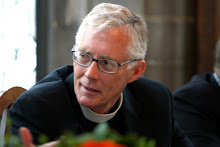
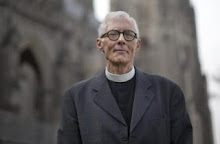
As many of you know, the big news this week for the Halls is that Kathy and I will be leaving here next month to move to Washington where I’ve been called as the Dean of Washington National Cathedral.  This has been a surprising piece of news to many, especially as we’ve been here not quite three years.  The responses have been all over the place:  congratulatory, sad, angry, even cynical.  I certainly understand the range of those feelings.  When we came here in late 2009 we were sure that this would be my last job and we’d be here for a good while. 
I have to tell you that I did not go after the position at the Cathedral.  When they asked if I’d be a candidate, my first thought was, “I’m very happy where I am.  I don’t need to do this.”  But as I engaged the search process, it became clear to me that this was something I needed to do.  When I compared the Cathedral’s needs and my gifts, I realized that I have a particular set of skills and experience that the Cathedral needs at this moment in its history.  And because Washington National Cathedral is the public face of the Episcopal Church in America, its recovery from last year’s earthquake and its flourishing as the nation’s church is important work on behalf of the whole church.
The point here is, that like David and like Gabriel I have gone through a time when I have had to look inside, where God has shown me some aspects of myself.  I’ve had to wrestle with the tension between humility and ambition. We all have moments like that. The first idea this morning relates to David’s aha! moment.  “You are the man!” "I have sinned against the LORD."  A big part of what God does in our lives over time is help us mature in the faith to the point where we can accept and acknowledge ourselves as we are.  The monk and writer Thomas Merton defined salvation as claiming our unique identity, living as one’s authentic self.  The longer I’m around, the more I agree with him.

One way to understand sin is to see it as a kind of selfishness.  Another way to understand it is as a form of self-hatred.  We tend to think we are good or loveable or holy only insofar as we line ourselves up against an idealized set of criteria.  As Merton shows us, one deep Gospel truth is that all people, all things, are good in and of themselves.  We get into trouble when we distrust that, when we think we have to be someone or something other than who and what we truly are.  God became human in a real, specific person, Jesus of Nazareth.  By so doing, God blessed each of us in our uniqueness and showed us that living faithful to the logic of our lives as Jesus did is the only thing that ultimately matters about being human.
There’s a second idea in this David-Nathan story, too, and it relates to the work I am going next to do.  Israel was always suspicious of kings.  So as the role of king arose so did the role of prophet.  For every king in Israel there was also a prophet, a person called and appointed to remind the king, both personally and socially, of God’s values.
Now I’m not so bold as to think of myself as Nathan to Obama’s or Romney’s David.  But I do believe that we are at a point in America where the faith community must assert its role as the prophetic community reminding our divided and dysfunctional leaders of God’s values as they relate to our public life.  This is not to be confused with a personal “speaking truth to power”, a phrase I have always disliked.  (As Noam Chomsky says, power already knows the truth and they certainly don’t want to hear it from you.)  It’s not speaking to anybody.  It’s speaking with them.  I believe that the faith community—Christians, Jews, Muslims, Buddhists, Hindus—I believe the faith community can reassert its relevance in the 21st century by convening a conversation among the polarized and divided constituencies of our national life.  The aim of this conversation is to find common ground for shared work that will advance the common good. Common ground for the common good united in common prayer is a very Anglican way to see the relation of faith and politics.
We are all part of something bigger than ourselves.  From the Puritans to the Civil Rights movement, from the Great Awakening to the Moral Majority, Progressive and Conservative Americans have always seen a religious dimension to our national life.  We in the religious community have retreated of late from our historical role not only as the nation’s conscience but as the people who can stand with those on both sides of the divide and pull them together in the service of a more just, compassionate, and free society.  Nathan’s ministry to David in today’s Old Testament passage reminds us that you and I, as members of this church and as people of faith, are called to be the voice of God’s values in a broken world.
This morning, I ask that you think of yourself as someone God loves enough to tell the truth to, and that you can come from that revelation into empowered to bring your faith into the world.  God loves you in the places you don’t even know about and accept.  God loves other people that way, too. God calls all of us to be agents of love, justice, healing and hope in the world.  God calls all of us to see that the truest thing about all of us is our connection to each other and to God, the source and ground of our being.
It’s all finally about self-acceptance and connection.  That’s what Jesus modeled for us.  That’s how we can live. Here is how James Joyce describes what goes through Gabriel Conroy’s mind at the end of his story, “The Dead”:
Snow was general all over Ireland. It was falling on every part of the dark central plain, on the treeless hills . . . It was falling, too, upon every part of the lonely churchyard on the hill where Michael Furey lay buried. It lay thickly drifted on the crooked crosses and headstones, on the spears of the little gate, on the barren thorns. His soul swooned slowly as he heard the snow falling faintly through the universe and faintly falling, like the descent of their last end, upon all the living and the dead. [James Joyce, “The Dead”, Dubliners]
Amen.


Saturday, August 4, 2012

Op-Ed Article: Washington Post [August 1, 2012]


Washington National Cathedral dean: Talking about the Episcopalian identity crisis
By Rev. Gary Hal
August 1, 2012 

http://www.washingtonpost.com/local/washington-national-cathedral-dean-talking-about-the-episcopalian-identity-crisis/2012/08/01/gJQAZzOQPX_story.html

Followers of recent developments in the Episcopal Church have felt called to opine about the state, health and future of the church. As the person selected to be the next dean of Washington National Cathedral, it’s fitting that I weigh in.

The Episcopal Church just completed its 77th General Convention in mid-July. The biggest news to come from Indianapolis: After years of study, the church approved a rite for the blessing of same-gender relationships that will be available across the denomination next January.  

So much for the big news from Indianapolis. Other important things happened there as well, however. Most significantly from my perspective, the church actually began talking about the institutional and cultural factors impacting church membership and attendance. The facts are striking. All mainline (so-called liberal and conservative) denominations areexperiencing sharp declines in every marker of institutional vitality: not only membership and attendance, but giving and new church start-ups as well. 

Everyone with an agenda wants to spin these numbers in the service of an ideology. Those who call themselves “traditionalists” claim that church attendance will rise once we return to the high Christendom establishment ways of doing theology and worship. The more progressive types claim that we are facing a crisis of relevance and that only a bolder social profile will draw the unchurched to us in droves.

While I tend toward the progressive side in this controversy, I am not persuaded by either analysis. My own sense is that we face a crisis of credibility. For those especially under 40, the Episcopal Church (and its companion churches and faith traditions) no longer seems a credible place in which to engage God, learn to pray or to give ourselves in ministry. We seem, to those outside us, exclusive and opaque.
Those of us who love the traditions (and habits) of institutional Christianity might feel somewhat wounded by the seeming disinterest in the practices we have come to live by. But if the Episcopal Church is to thrive in the 21st century, it must do three things. It must develop a clear, missional identity. It must project that identity outward and invite people into it. And it must take seriously the needs and concerns of those who come toward us and adapt to the new life and energy they bring.
Does that mean that we will no longer continue to worship in our stately Anglican ways? Of course not. But it does mean that we will need to find new modes of liturgical, musical, and theological expression to complement the great traditional strengths we already have. And this is not new behavior for Anglicans. Queen Elizabeth I forged a pragmatic consensus between Catholics and Protestants in 1559. Bishop William White of Pennsylvania led the first General Convention of the Episcopal Church to a uniquely American way of governance in 1789. The church opened itself up to the sacramental ministries of women bishops, priests and deacons in 1976. We have always been a pragmatic, evolving tradition.

Washington National Cathedral has been thinking about and studying a creative and faithful response to current realities for several years, and its leadership has developed a four-point strategic plan to help it face into the 21st century with vibrancy and hope. The cathedral will continue to be the nation’s church, a place where Americans come together to celebrate and to mourn. It will continue to be a sacred space characterized by beautiful music and liturgy and the continued preservation of an architectural gem. It will increasingly serve as the cathedral for the Diocese and city of Washington, working with congregations and community leaders to reflect the breadth of the area’s diversity. And it will expand its role as a convener of conversations and developer of projects concerning our national and interfaith life. 

The leaders of Washington National Cathedral, in concert with Bishop Mariann Edgar Budde, have worked hard to envision a new way forward in worship, ministry and program for this unique faith community. I am honored and excited to join them in work that will help get us closer in solving the church’s identity crisis and strengthen the Cathedral’s national mission.

The Rev. Canon Gary R. Hall is rector of Christ Church Cranbrook in Bloomfield Hills, Mich., and has been selected as the 10th dean of Washington National Cathedral.

Sunday, July 15, 2012

Homily: The Seventh Sunday after Pentecost [July 15, 2012] All Saints Pasadena

 
“Going Against the Grain”


            I think I should probably re-introduce myself.  I’m Gary Hall, and I worked here for eleven years, from 1990 to 2001.  I’ve been away from All Saints now for the same number of years I was on the staff, so I’m sure a declining percentage of people here remember me.  I’m now rector of Christ Church Cranbrook, a parish in Michigan.  I come back here every summer to see if the place is still getting along without me and to receive a new infusion of progressive movement spirit.
            When you hang around with progressive movement types, one of the phrases you hear continually is “speaking truth to power”.  Today’s Gospel tells us the story of what happens when you try to do that.  If you’re John the Baptist, you get your head cut off.  Many of us who are drawn to peace and justice have—how do I put this politely?—we have big mouths.  A parishioner of mine from my Malibu days used to tell me, “My dear boy, you will never be a bishop.  You can’t help saying the first thing that comes into your head.”   So there’s speaking truth to power, and then there’s having a big mouth.  I seem to fall into both categories. I suppose that’s why I fit in so well for eleven years here at All Saints.
            The great progressive intellectual Noam Chomsky is skeptical about “speaking truth to power”.  Here’s what he says:
I don’t agree with the slogan [speak truth to power]. First of all, you don’t have to speak truth to power, because they know it already. And secondly, you don’t speak truth to anybody, that’s too arrogant. What you do is join with people and try to find the truth, so you listen to them and tell them what you think and so on, and you try to encourage people to think for themselves. –Noam Chomsky

Chomsky’s words remind me of one of the best scenes in the movie Casablanca.  It’s night at Rick’s place, and the German soldiers start singing a military drinking song.  In response, the great freedom fighter Victor Laszlo goes up to the band leader and tells him to play “La Marseillaise”.  All the French patriots sing a stirring rendition of their national anthem, drowning out the Germans.  And what does it get them? At the end of the song, Colonel Strasser tells Captain Renault to shut down the bar for good.  The patriots spoke—or rather sung—truth to power, and power did what it does.  It crushed them.
            That is very much what we see in today’s Gospel reading from Mark.  What made John the Baptist think it was a strategically good idea to criticize Herod for committing adultery with his brother’s wife?  Herod was kind of a touchy guy.  He was a puppet king of Israel serving the interests of Rome.  He thought himself the Messiah—the Jewish king who would bring back the throne of David, even if as a puppet satellite state.  So John’s message that there was another Messiah coming—Jesus, an anti-king—was not precisely calculated to win friends and influence people.  We know from the contemporary historian Josephus that Herod was already afraid that John the Baptist would lead an insurrection against him. So getting up in public and accusing a nervous king of adultery was not a smooth move.  It was like asking for “La Marseillaise” squared.
One of my favorite contemporary writers is a philosopher named Jonathan Lear, who teaches at the University of Chicago.  Lear is also a Freudian psychoanalyst, and he writes intriguingly about the connections between philosophy and psychology.  In his book Open Minded he tells the story of a dream he used to have about his name—Lear—and its connection to the Shakespeare play.   He realized that in his dreams he was not King Lear so much as he was Cordelia, Lear’s daughter who refused to tell the king what he wanted to hear and is banished for her refusal.  Jonathan Lear’s flash of insight came when he realized that Cordelia’s problem was his problem.  Here is what he says:
To identify with Cordelia is to want to be blunt, to avoid embellishment, flattery, or hypocrisy-and to want to be loved for doing just that.  This is not a set of desires which get satisfied often.  By and large, people prefer to be flattered.  They find it hard to recognize love in a blunt appraisal; and they find it even harder to reciprocate such love.  Cordelia's strategy is not the route to massive popularity. -- Jonathan Lear, Open Minded: Working Out the Logic of the Soul, p. 3
We want to tell the truth, and we want to be loved for doing it.  That was Cordelia’s problem.  That was Jonathan Lear’s problem.  That was John the Baptist’s problem.  I can’t speak for you, but I realize that often it’s my problem, too.
            So what is a prophet, or a prophetic community, to do?  We want to speak the truth, we want to hold power accountable, and we want, if possible, to avoid being beheaded. Many of the people we call saints today were those who stood up for Christianity against the oppressive claims of empire.  They were martyrs—literally “witnesses”—to the truth of the Gospel who did indeed speak truth to power.  So martyrdom—witness—is an ancient and honorable tradition in Christianity.  And there are times when we need to risk it in the service of what is right.  But I’ve been around the movement world a long time, and a lot of what we call prophecy is simply self-dramatization.  There is another ancient tradition, a more pragmatic one, a tradition that counsels working with power to achieve good ends. Of course, there are times when imperial power is intractable, when you have to stand up and demand that the band play “La Marseillaise”, even though you know they’ll shut down the bar.  But there are also times to work with power to bring about a good result for everybody.  The trick, of course, is to be able to tell the difference.
            Listen again to the last part of what Noam Chomsky says:
And secondly, you don’t speak truth to anybody, that’s too arrogant. What you do is join with people and try to find the truth, so you listen to them and tell them what you think and so on, and you try to encourage people to think for themselves.

One of the things I’ve learned as a preacher is that anybody can get up in a pulpit, point their finger at somebody, and tell them what is wrong with them.  The harder thing is to build the kind of relationships that will make for real change.
The story of John the Baptist’s execution for speaking truth to power leads me to make two points about its implications.  One point is about our national life.  The other is about our personal lives.
            First, about our national life:  if you’re anything like me, you’re already sick of the presidential election, and it’s only July.  [Am I in danger of putting All Saints’ tax-exempt status at risk here?] Speaking as both a liberal and as an American, I am increasingly troubled by the ideological polarization of our nation.  One of the insights of American Pragmatism (espoused by Ralph Waldo Emerson, William James, John Dewey, Cornell West and others) is that arguing over principles will never get you anywhere.  The late philosopher Richard Rorty, a great pragmatist thinker, said,
When I first went into philosophy, I was looking for first principles. I thought that if you could get the right principles, everything else would fall into place. I was wrong. I gradually realized that it is only when things have already fallen into place that you can figure out what principles you want. A political left needs agreement on projects much more than principles.  [Richard Rorty, “First Projects, Then Principles” The Nation, December 22, 1997, pp. 18-21]

Rorty was speaking to the left here, but he might have been talking to the nation as a whole.  We Americans will never agree about principles.  Some of us will continue to believe that America is most itself when it is generous and compassionate; others will see America as primarily a home for untrammeled individual liberty and the main chance.  As a people, we will never completely agree about what America means.  But we can find common ground about what America does. As Rorty says: first projects, then principles.  I believe we in the faith community have a role that goes beyond the mere speaking of truth to power.  I believe we can be the ones who convene a national conversation that transcends ideology, a conversation about what we as Americans can do to improve the quality of life for everyone.  As Chomsky says, we can join with people to find the truth.  As Rorty says, we’ll derive new principles once we’ve worked together on projects that advance the common good.
            So my first point is aimed at us liberal, progressive Christians.  We need less to speak truth to power and more to find common ground with those we have stigmatized as our adversaries.  For the most part, they want what we want. Common projects—and maybe sharing a meal together—will take us all to a new, shared place.  So this summer, try taking a Tea Partier to lunch. But don’t be naïve about it.  Get them to pick up the check.
            Second:  we should hear what Chomsky and Rorty have to say in its relevance to our personal lives.  How many arguments have I been in where I wanted to be right more than I wanted to be reconciled?  Households are political communities.  The people in them may disagree about principles, but in the end they all want the same things.  I know that I have failed as a husband, as father, as a son when I have insisted on my own rightness over against the needs of the family community.  It’s one thing to end an argument by slamming the door with a great exit line.  It’s another to open yourself to the other’s point of view and make a new truth together.  First projects, then principles works as a mantra not only in the public square.  It also works at home, on the job, and in all areas of our lives.  I’ve been abstractly right and relationally wrong about as much in my life as I want to be.  Join with people to find the truth.  First projects, then principles.
The Gospel will always be countercultural.  Rome, Medieval Europe, contemporary America all fall short of God’s vision for human life.  In the same way, every family can be more loving and just.  But too often we use the countercultural nature of the Gospel as a club with which to beat each other.  Either mercy or justice, we cry.  Either compassion or freedom.  Instead of that tired drumbeat, how about this:  from now on, no more false choices.  No more speaking truth to power.  First projects, then principles.  Let’s join with each other—at home, at work, in the community--and make a new, shared truth.  Let us eat and work together to build that truth into a living reality of mutuality and justice and freedom and compassion.  And then let us have the grace and forbearance to live that new truth and walk together into the abundant life God always offers us, made real now around this table at which we dine together with each other and with Jesus.  Amen.


Sunday, July 1, 2012

Homily: The Fifth Sunday after Pentecost [July 1, 2012] Christ Church Cranbrook


            As do many in this community, every year Kathy and I go to Stratford, Ontario for a couple of days to see some Shakespeare plays.  We made our yearly trek this past week, and as we were driving along in the heavy morning traffic on M-59 we saw something bizarre.  It was a man, about my age, serenely riding a recumbent bicycle in the middle of all that traffic as if he were alone on a country road. I looked over and kind of admired the guy.  I, too, am a cyclist, but I tend to avoid traffic like that, or when in it I appear kind of like an anxious ferret, looking all around me for distracted or aggressive motorists.  Not this guy:  he was a real cool customer.

The literally and figuratively laid-back recumbent biker did not impress my wife, however. Kathy Hall, ever the voice of warm pastoral acceptance, called out, “Oh that’s real safe!”  And then, to as if to emphasize the point, she added, “What an idiot!”  “Oh, I don’t know,” I said.  “He seems to be enjoying himself.”  Not good enough for Kathy.  “He’s a moron! He’s going to get himself killed!” If you’ve ever wondered, now you know.  This is how pastors and their wives talk to each other when we’re away from church. But sometimes the roles are reversed.

Kathy and I never did come to a consensus about the recumbent M-59 cyclist, but both the vision of him and the interchange between us got me to thinking about safety.  As a preacher always on the lookout for metaphors and symbols in daily life (and for sermon illustrations), I saw this bike rider as a perfect image of the human condition.  We’re all kind of like someone trying to ride a bicycle through the heavy traffic of life.  We can only get through it by fostering the illusion that we’re safe, that we are immune from accident or chance or even worse.  But a dispassionate observer like my wife or God (Kathy always likes it when I compare her to the Almighty in a sermon) might see things differently.  It is in fact the case that life is full of real dangers, both to us and to those we care about.  We are all finite, mortal, fragile.  We get through our days telling ourselves otherwise, but life manages, before we’re through with it, to teach all of us one way or another that we are all vulnerable.

This lesson is in some sense what two people learn in their encounter with Jesus in today’s Gospel.  Perhaps it’s because we’re just back from Stratford, but this account, from Mark, has always struck me as a bit Shakespearean:  it’s a story within a story, a modulation between plot and subplot.  The big story, the plot, tells of the illness and raising of Jairus’s daughter.  The little story, the subplot, recounts the healing of a woman with a twelve-year flow of blood.  These two stories seem entirely unrelated, yet as in a Shakespeare play Mark has combined them because each story helps us better understand the other. 

The big story is the account of the illness and raising of Jairus’s daughter.  As Jonathan said last week, in this part of Mark’s Gospel there’s a lot of coming and going across the lake, and when Jesus returns to his home base from the other side he is approached by Jairus, a leader of the synagogue.  Jairus is presumably the kind of important man who would have had nothing to do with an itinerant healer like Jesus, but now he is desperate.  His daughter is dying.  He begs Jesus repeatedly, "My little daughter is at the point of death. Come and lay your hands on her, so that she may be made well, and live."  Jesus complies and accompanies Jairus to his house.  On the way there, we learn that the girl has died.  Jesus gets to the house (surrounded with weeping and wailing mourners) and asks, "Why do you make a commotion and weep? The child is not dead but sleeping."  They laugh derisively, but he takes the girl by the hand, says "Little girl, get up!" and she revives. In the story’s best detail, Jesus tells them to get her something to eat.

Folded in to this story is another one, the brief account of a woman with a twelve-year hemorrhage.  Unlike Jairus, she does not approach Jesus directly.  She comes up behind him, touches his cloak, and says, "If I but touch his clothes, I will be made well."  She is immediately healed, but Jesus knows that something has happened.  The woman comes forward, “in fear and trembling”, and confesses that she’s the one who touched him.  Jesus replies, "Daughter, your faith has made you well; go in peace, and be healed of your disease."
What is going on here?  Why does Mark tell us one story wrapped around another one?
Think first about what the woman and Jairus have in common.  They are both paralyzed with fear.  Jairus fears he will lose his little girl.  The woman fears that she will die of her hemorrhage.  On one level, they are like you and me when we get a bad diagnosis.  They fear for their physical safety.  They are afraid of death.
But they have more to fear than death.  They also fear the shame of a religious purity system that told them they were unclean. The woman’s hemorrhage made her personally unclean.  Jesus’s disciples try to stop him from going to a house with a dead body because touching a dead person would make Jesus ritually unclean.  So the two main figures in these stories both face the same twin challenges.  They are afraid for their (or their child’s) life.  They are afraid of becoming outcasts because of their ritual impurity. 
So Jairus and the woman are united in fear.  But they are united in one other important way as well.  They both acknowledge their fear.  They each have gotten to a place where polite denial will no longer work for them.  Jairus breaks out of the synagogue’s purity code to reach out to an itinerant healer.  The woman dares to touch the hem of that healer’s garment.  Things are desperate enough for each of them to know they need to get help.  They move from living in the illusion of safety to an acknowledgment of their need for something else.  And when they reach out to touch that something else in the person of Jesus, they find it to be trustworthy.
What touches me so about these stories is that Jairus and the woman have been brought to the point where they can acknowledge that they are not safe.  You and I who live in communities like this one—beautiful places with good schools and lovely houses and imposing churches—people like us gravitate to neighborhoods like this because they help us maintain the illusion that we can, by our own efforts, keep ourselves and our loved ones safe from life’s chances.  We all expect cancer, substance abuse, broken relationships, and accidental death to stay outside the bounds of our gated communities.  We go through life thinking that we can keep ourselves healthy and happy and whole by means of our own will, our own efforts.  We buy into a vision of a life that is supposed to be immune from suffering and conflict and loss.
And then something happens:  an illness; the death of a parent or spouse or child.  We realize that the beautiful gated world we have made for ourselves is an illusion.  We come to the acknowledgment that we need something, some One else.  That is the moment we see in these two stories this morning, and that is a moment that happens at least once in the life of every mature person of faith.  It’s the realization that the things in which I have put my trust—my achievements, my good taste, my status—none of those things will finally save me.  It’s the realization that I have mistaken my good luck for a cosmic King’s X.  It’s the moment when I come to see that I am, like the people in the story, like poor people and sick people and prisoners and mourners—that I too am vulnerable.  It’s the moment when I reach out for something bigger and deeper and real.
 And what today’s Gospel shows us is a moment when I see that the thing I’m reaching out for is actually there. Though the things I have given myself over to have shown themselves mostly to be fake, the one thing I can finally hold on to is the hem of Jesus’s garment.  Jairus and the woman, you and I, make the journey from illusion to truth when we let go of our false sense of security and latch on to the One in whom our real safety rests.  We are all like the man riding the recumbent bicycle on M-59.  We’re vulnerable to the changes and chances of life just like everybody else.  The point of these two Gospel stories this morning is that there is something and some One real in whom we can put our trust.  When you get to the place where Jairus was, where the woman was, where all of us will eventually be, you’ll have no other choice but to reach out and grab for Jesus.
And the good news for each and all of us this morning is that when you do get there and you do reach out, Jesus, and the One he calls his Father, will be there to love and bless and heal and restore you in ways you can’t even now begin to imagine or expect.  I know it because I’ve seen it. I know it because I’ve lived it. We’re all in imminent danger.  And we’re all ultimately safe.   That’s what this whole Christian enterprise is finally about.  And that’s why we all gather now around God’s table to give thanks.  Amen.

Sunday, June 10, 2012

Homily: The Second Sunday after Pentecost [June 10, 2012] Christ Church Cranbrook


            One of the arguments for regular, repeated reading of the Bible is the way you keep coming across sayings and phrases you’d swear you’d never heard or seen before.  This morning’s Gospel—Mark’s account of Jesus’s family’s attempts to restrain him and the ensuing uproar about where his power comes from—this is a passage I have preached on at least a dozen times over the course of my career.  As I sat down to work on today’s sermon, I thought I had read and talked about this bit of scripture as much as I could and would not be able to find anything new in it. 
            Then, as I read and reflected on it, I discovered this saying of Jesus that I had never really taken in before:
But no one can enter a strong man's house and plunder his property without first tying up the strong man; then indeed the house can be plundered.—Mark 3.27
When I began to think about this saying, it troubled me.  What does it have to do with anything that has come before it?  In these early chapters of Mark’s Gospel, the Jesus movement has really taken off.  As he goes around Galilee preaching, teaching, healing, and casting out demons, the crowds keep coming toward Jesus for more.  He appoints the 12 apostles to help him do his work.  Still the crowds keep coming.  In the Gospel for today, even more people have besieged him for help.  His family comes to restrain him, thinking that he is out of his mind.  The scribes come up from the Jerusalem home office and accuse Jesus of being in league with the Devil. They say, "He has Beelzebul, and by the ruler of the demons he casts out demons."
What interests me today is the nugget he slips in here in the middle of all this, a little gem of a saying I had previously overlooked:
But no one can enter a strong man's house and plunder his property without first tying up the strong man; then indeed the house can be plundered.—Mark 3.27
Who is the strong man here?  And who is the one who can tie him up and plunder his house? What is going on?
As Jesus begins his ministry in Mark’s Gospel, the first words we hear from him are these: “The time is fulfilled, and the kingdom of God has come near; repent, and believe in the good news.” [Mark 1.15] In Mark’s Gospel, Jesus has really only one message: “The time is fulfilled, and the kingdom of God has come near; repent, and believe in the good news.” In this political season, we might call him a “one-issue candidate”. 
Jesus used the phrase “kingdom of God” as a way to describe what was happening all around him.  For Jesus, the kingdom of God is a space or place or zone where all is as God intended it to be:  the sick become well, the poor are fed, the mighty are cast down, demons are cast out.  Wherever Jesus is, God’s kingdom is, too.  Normally, we live our lives in the kingdom of this world:  for Jesus that kingdom was ruled by Caesar, for the Jews it was ruled by Beelzebul, the prince of demons. The whole point of Jesus’s ministry is the proclamation of the kingdom of God.  It is at hand!  Caesar’s days, Beelzebul’s days, are numbered.  The kingdom of this world keeps us oppressed and depressed. The kingdom of God liberates us.  People are getting healthy, compassionate, and joyful. What’s beginning in Jesus will not be stopped until it frees and transforms the whole world.
Now that’s good or bad news depending on where you stand in relation to it.  If you’re poor, sick, oppressed, or lonely, the kingdom of God is good, freeing news.  But if you’re on Caesar’s or Beelzebul’s team, or if their name is on your paycheck, then it’s very bad news indeed.  You’ll have to find another gig.  Those in league with life’s oppressive forces might find the promise of liberation somewhat threatening.  Hence the resistance to Jesus from the establishment.  Hence the confusion about Jesus even in his own family.
“The time is fulfilled, and the kingdom of God has come near; repent, and believe in the good news.” The point, at least for me, is this:  those who live out and enact God’s kingdom are God’s true messengers.  Those who stand in opposition to God’s kingdom are, perhaps unknowingly, in the service of Caesar or Beelzebul.  Hence the saying about the strong man.  “No one can enter a strong man's house and plunder his property without first tying up the strong man.”  Caesar is the strong man.  Beelzebul is the strong man.  Jesus is the seemingly weak man who can confound the strong man.  He has knotted Caesar and Beelzebul up in chains of their own making.  By living a compassionate, joyful life, by spreading health and justice, by casting out demons, Jesus is using the powers of evil against themselves. 
As I’ve thought about this passage this past week, I’ve done so against the backdrop of what, for me, has been a pretty ugly story:  the attack the Vatican is making on a major group of American Catholic nuns, the Leadership Group of Women Religious.  Through a group of theological thought police, the Congregation for the Doctrine of the Faith, the Vatican has charged American nuns with spending too much time on the issues of poverty and economic justice and not enough condemning abortion and same-sex marriage. This past week they condemned a book by an American nun who is also a world-class scholar.  The book is Just Love: A Framework for Christian Sexual Ethics, and the scholar is Sister Margaret Farley, a 77-year-old professor emerita at Yale Divinity School and past president of the Catholic Theological Society of America.  The ironies in all this would be funny if they weren’t so tragic. As Maureen Dowd said in her column last week:
The denunciation of Sister Farley’s book is based on the fact that she deals with the modern world as it is. She refuses to fall in line with a Vatican rigidly clinging to an inbred, illusory world where men rule with no backtalk from women, gays are deviants, the divorced can’t remarry, men and women can’t use contraception, masturbation is a grave disorder and celibacy is enshrined, even as a global pedophilia scandal rages. [Maureen Dowd, “Is Pleasure a Sin?” NY Times 6/6/2012]
If I can name any group of people in the world who do Jesus’s work on earth, it is women religious, the nuns.  If I can name any group of people who both announce and enact the kingdom of God on earth, it is the nuns.  They give themselves sacrificially, they live joyfully, they bring healing and grace and hope to blighted areas that you and I would never dare even visit ourselves, let alone live in.  And for all that they find themselves upbraided by their hierarchy, just as Jesus was upbraided by the scribes.  The nuns of America are casting out demons in their own way here, among us, in the 21st century.  Jesus did that in his day and was misunderstood by his family and understood all too well by the religious and political elite.  He was the one binding the strong man in his day.  Nuns are doing that work in ours.
The poet William Blake said of the great John Milton regarding Paradise Lost that Milton “was of the Devil’s party without knowing it”.  Christianity is finally about announcing and enacting the kingdom of God.  Oppressive systems want to make Christianity into a set of ideas and then define a person’s orthodoxy by their assent to or refusal of those ideas. Imperial hierarchies tend to think the Christian’s job is to become the strong man.  From the Gospel point of view, from the nuns’ point of view, the Christian’s job is to help Jesus bind the strong man. Christianity is not about the exercise of power.  It is about how we treat people. Not strong or famous people.  It’s about how we treat weak and powerless people. Anyone can suck up to the strong man.  Only a real Christian can confound and bind him.
What’s true for the Roman Catholics, of course, is true for us.  A true Christian is someone who does today the work that Jesus did then.  A true Christian casts out the demons of hate and fear.  A true Christian is an agent of healing and blessing and hope.  A true Christian is compassionate and joyful.  There are many angry, judgmental, hateful people abroad today who call themselves Christians and presume to tell the rest of us what real Christians ought to think and believe.  I say, with Blake, that they are of the Devil’s party without knowing it.  I say, with Jesus, that the kingdom of God is at hand.  The strong man is being bound by all kinds of people—even and especially by faithful women religious who bring good news to the poor, and also by countless others who seek to make life better for all those with whom they come into contact.  Doing that, and perhaps only that, is the church’s real business. Don’t confuse what some people say they believe with how they actually behave.  And don’t forget that even Jesus’s relatives thought he was crazy.
Sometimes we don’t recognize Jesus, even when he is right there in front of us.  Look around you. Even now, the pains and griefs of the world are being borne by those who sense the breaking in upon us of a new and hopeful age. Let us support them, thank them, and strive to be like them.“ The time is fulfilled, and the kingdom of God has come near; repent, and believe in the good news.” Amen.


Sunday, June 3, 2012

The Rector's Monday Message: June 4, 2012


Table or Altar?

At the east end of Christ Church stands a beautiful wooden piece of furniture, usually decorated with a cross, flowers, a fair linen, and a silk frontal.  Some people call this structure an altar.  Some call it a table. The longer I am in the church, the more I see this choice of names as fundamental to understanding what it is we do when we gather together as the church.

I was raised to call this structure the altar. It was the place where the priest stood and supplicated God on the people’s behalf.  The idea of an altar is one with a long history in Christianity and Judaism, not to mention polytheistic religions. In the cult of the Jerusalem Temple, people gained entry to the building by bringing an animal to sacrifice.  When the early church began as a Jewish movement, it understood Jesus’s death much in the way Judaism had understood Temple sacrifice.  God was pictured as a wrathful, vengeful deity who needed to be “propitiated” (in the words of the old Prayer Book) or placated by the sacrifice of an animal or, in Jesus’s case, a human being. 

To think of the central edifice of Christian worship as an altar is to say something about God and about us.  A theology based on sacrifice is one that holds up purity as both the goal of human life and as something finally unattainable by imperfect human beings.  Jesus was a once-for-all sacrifice for human sin.  Nothing human beings can do will ever deserve such a transaction. Since we can never be fully pure, we need regularly to make a sacrificial offering at God’s altar as a way of asking for God’s continual mercy and forgiveness.

That, essentially, is the altar theology, and there is much to recommend it.  It takes our weakness and finitude seriously.  It represents the “size gap” between God and us dramatically.  It honors my need to worship the One at the center of creation with reverence and dignity. But this theology has drawbacks, too.  It pictures God as a divine monarch, and it makes my relationship with God very much like that of a subject petitioning a stern (but forgiving) king.  It assumes that the central dynamic between God and me is based primarily on power.

As a complement to the altar theology, there is another way to think of this piece of furniture at the east end of the church.  Rather than seeing it as an edifice on which to enact a ritual sacrifice (even one of “praise and thanksgiving”), we might, following Jesus’s lead in the Gospels, think of it as a table. 

Jesus spent a lot of his time in table fellowship.  He gathered people inclusively, generously, compassionately for meals at his table.  On the night before he died he gathered his companions and told them to eat bread and wine together in his memory until he comes again.  The ritual that Jesus instituted—the Eucharist—was really a meal.  And in making a meal the central act of Christian worship, Jesus was suggesting that fellowship with God and other people is all about mutuality, sharing, hospitality, and grace. 

It is significant that the Book of Common Prayer in all its iterations—1549, 1552, 1662, 1789, 1892, 1928, 1979—has consistently used the word “table” to name the place where this ritual meal takes place.  Most of the time it’s called “the Table”.  Sometimes it’s named “The Lord’s Table”.  In the most recent prayer book it’s called “the Holy Table”.  As far as I can tell by a quick perusal of all the prayer books, the Book of Common Prayer never uses the word “altar” in reference to the Lord’s Holy Table.  “Altar” is a word that came into common usage in our church during the 19th century Oxford Movement.  In its time it was an important term that recalled us of the seriousness and transcendence of the Eucharistic liturgy.  But its use has snuck into our common consciousness in such a way that we have become disconnected from the basic, grounded humanness of what we are doing when we gather together for Communion.

When the early Christians proclaimed that Jesus was present with them in the Eucharist, they weren’t talking about the transubstantiation of the bread and wine.  What they meant was that, when they gathered together around the Lord’s Table to give thanks, Jesus was present with them in the room.  As the great Anglican theologian Richard Hooker said, the Eucharist is about the transformation of persons, not substances.  Holy Communion is not a magic act performed in a royal temple.  It is a meal in which we experience God’s presence among and with us as we break bread and drink wine with each other.

To see Communion this way may, for some, diminish its mystery and holiness.  Perhaps.  But from my perspective, the invitation to dine with Jesus and each other magnifies the depth and power of what we are doing together as we gather at the table.  God values us enough to gather us as guests at Jesus’s table.  God gathers us without reference to class, social, racial, ethnic, sexual, or ideological status or orientation.  The inclusiveness of the invitation is an indication of the kind of God we’re dealing with in Jesus.  Everyone is welcome. Everyone is accepted. Everyone is loved.

Summer is a time when many of us will have occasion for a variety of meals in a range of settings.  As you gather at your various tables this summer, try to see them as Eucharistic meals in which, when two or three are gathered together, Jesus is present, too.  Let the tables at which we gather in this season be Holy Tables, the Lord’s Tables. The love and welcome we offer and experience are expressions of the ultimate love behind what God in Jesus is all about. This experience of table fellowship is (or should be) what we know in our churchgoing as well.

And, of course:  wherever you are this summer, don’t forget to go to church!
Gary Hall

With this issue, “The Rector’s Monday Message” goes on summer hiatus until Homecoming in September.  The next issue will appear on Monday, September 10. 


Homily: June 3, 2012 [Trinity Sunday] Christ Church Cranbrook


            There are many intriguing news stories abroad these days, but the one that interests me the most right now concerns the scandal of secret Vatican documents allegedly stolen and copied by Paolo Gabriele, the Pope’s butler.  The heart of the scandal involves mismanagement of the Vatican bank, including charges of malfeasance and cronyism.  But to me perhaps the greatest mystery is this:  the Pope has a butler?  Really?
            If the Pope has a butler, I ask myself, shouldn’t all Christian clergy have butlers?  More to the point, shouldn’t I have a butler? Once I open myself to these questions, all kinds of other queries cascade into my mind.  If I had a butler, what would he do?  I don’t have any secret correspondence, so there’d be no Top Secret documents for him to steal and photocopy.  And Christ Church Cranbrook doesn’t have a bank, so the only cronyism he could uncover might involve sweetheart deals around the treats at Vacation Bible School.  Where, precisely, do all those Goldfish and Graham crackers really come from?  Are the fruit punch providers getting kickbacks?
            Questions and mysteries abound.  Today is Trinity Sunday, the day I have always called “the preacher’s graveyard”.  Everybody has questions about the Trinity, and the mistake that many preachers make is to try to answer them in a fifteen-minute sermon.  As I used to say when I taught seminary students, “It took the early church 400 years to develop this doctrine.  Do you think you can make sense of it in a sound bite?”
The convergence of the papal butler banking scandal and Trinity Sunday suggests that many—perhaps most—of us come to church with big questions on our minds.   In this we are not alone.  Today’s Gospel [John 3: 1-17] tells us the story of Nicodemus, a Pharisee who comes to Jesus by night with his questions.  Jesus tells him, “no one can see the kingdom of God without being born from above.” Nicodemus replies, “How can anyone be born after having grown old?”  Jesus responds, “You must be born from above. The wind blows where it chooses, and you hear the sound of it, but you do not know where it comes from or where it goes. So it is with everyone who is born of the Spirit.”  In a fit of exasperation so violent you can hear it rise from the page, Nicodemus asks, “‘How can these things be?”
            How can these things be? When you and I think about the big religious questions—the Holy Trinity, the meaning of suffering, the persistence of evil and injustice in the world, life after death—Nicodemus speaks for us. How can these things be?  Jesus has told him he must be born again from above, by water and the Holy Spirit.  Nicodemus is flummoxed, as frankly you and I would be flummoxed, too. How can these things be?
            In some sense, the life of faith is offered to us as an invitation to step into a mystery.  It’s very much like the experience of going to a museum or gallery and looking at abstract paintings or contemporary works of art.  Whenever I go to a big museum show, I always notice the people who rent the audio guides.  They amble from point to point holding the devices to their ears.  They are looking at a painting and trying to make sense of it by listening to what an intelligent person says about it.  The problem, though, is that the primary thing about the painting is the experience of looking at it.  When you’ve got the audio guide to your head, you’re in danger of confusing someone else’s experience of the painting for your own.  I say, turn off the audio guide and look at the picture.
            You and I are all products of Western culture and its inheritance of rationalism.  A painting, like a poem or any other work of art, is not primarily a cognitive, mental experience.  A work of art is an invitation into a new way of being or seeing or hearing.  One of my favorite writers, the great Flannery O’Connor, says that most of us approach art “as if it were a problem in algebra.  Find x.” O’Connor believes that we regularly mistake the process of thinking about something for the experience of the thing itself. She goes on to say this:
Some people have the notion that you read the story and then climb out of it into the meaning, but for the fiction writer himself the whole story is the meaning, because it is an experience, not an abstraction. [Flannery O’Connor, “The Nature and Aim of Fiction”]

Flannery O’Connor is talking about fiction here, but she could be talking about visual art or theology.  A priest scholar friend of mine has called this way of looking at religious problems, “the meaning heresy”.  What he means is that, since the Reformation and the Enlightenment, we Western people have tended to think that the most important thing about something is what it “means” as a mental experience.  People walk around art museums listening to curators talk on audio guides rather than looking at the pictures.  Readers pull apart stories solving for x rather than taking in the story as an emotional, mental, physical event.  Churchgoers take the bread and wine of communion and worry that they’re not “getting it” correctly because they don’t know precisely what the Eucharist is supposed to “mean”.
            When we put the problem this way, our friend Nicodemus doesn’t seem so different from you and me.  Nicodemus is in the grips of an early version of the meaning heresy.  He goes to Jesus by night, puzzled by what Jesus “means”.  Jesus replies not with an intellectual discourse but by talking about being born from above.  A similar interaction occurs in Matthew’s Gospel. John the Baptist’s disciples come to Jesus and ask him if he’s the one they’re waiting for.  He replies,
Go and tell John what you hear and see: the blind receive their sight, the lame walk, the lepers are cleansed, the deaf hear, the dead are raised, and the poor have good news brought to them. [Matthew 11. 4-5]

Jesus answers John’s disciples the same way he answers Nicodemus.  Christianity is not an idea.  It is an event, an experience, a relationship. Nicodemus and John’s disciples are looking for meaning.  Jesus gives them life.  
            When I read these stories I see something of myself.  As an educated Western person I so much want God to be a manageable, explainable, intellectual concept that I can take hold of and understand.  That I can’t quite understand God frustrates me, because I have been raised to expect that hard mental work will unlock all secrets.  But God’s mystery refuses to yield even to my exhaustive attempts to make sense of it.  As Saint Augustine said,”Since it is God we are speaking of, you do not understand it.  If you could understand it, it would not be God.” [Sermons 117.5]  
Today, Trinity Sunday, is the first Sunday after Pentecost.  By honoring the Trinity on the Sunday after the Holy Spirit comes, the church is saying that the first gift of the Spirit to the church is the revelation that we know God in three modes:  as Father, Son, and Holy Spirit, as Creator, Redeemer, and Sanctifier, as source of being, personal savior, and ongoing presence among us.  But the main point, if we need one this Sunday, is this:  the doctrine of the Trinity is a gift. It’s not an intellectual question or a problem to be solved.  It is an invitation to know and experience God not just as someone “out there” but as someone among us, “in here”.
            People go to museums and often come away having heard someone else’s ideas about the artworks rather than having entered the experience the painting or sculpture offered.  People read books the same way.  Nicodemus went to Jesus asking for an executive summary and was offered instead a new life, an invitation to be born again from above. Many people come to church thinking that what a preacher says about what we’re doing together is the most important thing about it.  As James Thurber once said, "Leave your mind alone".  Even people like me who think they understand the Trinity don't really understand it.  It's a mystery and a gift.  Like a beautiful painting, a poem, a symphony, or a dance, the Trinity is something we're invited to experience rather than interpret. It’s not an idea.  It’s a new way of being.
            The Trinity, like the Eucharist, is a gift.  In this gift, God offers you a new way of living and being.  Don’t mistake what it means for what it is.  It’s God we’re talking about, and if you think you understand it, then it isn’t God.  The wind blows where it chooses, and you hear the sound of it but you don’t know where it comes from.  We are all here, together, in the presence of a deep and wonderful mystery.  Don’t let your intelligence get in the way of it. Receive it as God’s gift. Step into it.  Let it embrace and transform you.  Doing that, for this morning at least, will be enough.  Amen.