I.
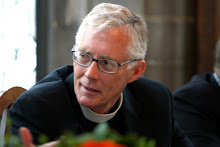
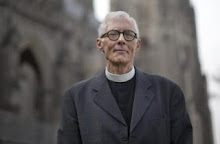
C. Davies Reed graduated from Seabury-Western Theological Seminary on Friday, June 1, 2007. For the three years prior to that, Davies had been in residence at the seminary, and in addition to his work in the classroom, field education, and community events, Davies was an extremely faithful chapel-goer. I don’t believe I ever found myself at a Seabury liturgy where Davies was not present, and I too went to chapel a lot.
Now Davies was well known for many things in chapel—he has a beautiful singing voice and an liturgical demeanor. But perhaps his greatest claim to fame was the regularity with which he prayed, aloud, in the daily intercessions for Mitch Daniels, the Governor of your state. There’s a place in the prayers where we pray for the President and all those in authority and leave a space for “the leaders of our several homelands”, and at that point Davies would always boom out the name “Mitch!” As well-intentioned as this practice was, it actually precipitated a spiritual crisis for many of our students. In Illinois we don’t feel quite so cheerful about Rod Blagoavich as you all seem to do about Mitch Daniels—Governor Blagoavich always reminds me of Mayor Quimby on The Simpsons—and the New Yorkers didn’t want to scream out “Eliot!” nor the Californians “Arnold!” every time Davies boomed out the name “Mitch!” So no other governors ever got their names mentioned. But Davies is such a charismatic leader that eventually other students, none of them Hoosiers, began praying for Mitch, too. By the time of Davies’ graduation, we were all praying for your governor on a daily basis. Under the spell of Davies natural authority, we couldn’t help ourselves. At Awards Night, after noting the succeeding triumphs of the Daniels administration during Davies’ tenure in seminary, I bestowed upon Davies the honorary award for “Intercessory Excellence” for the way in which he had almost singlehandedly made the Governor of Indiana’s life a blessing through his own faithfulness in intercessory prayer.
C. Davies Reed graduated from Seabury-Western Theological Seminary on Friday, June 1, 2007. On June 9, 2007—eight days after our chapel closed down for the summer and Davies left Seabury for good—the following story appeared in the Indianapolis Star:
Governor’s hog earns him a bite from farm’s dog
Dogs may not be a governor's best friend -- especially when they're startled by a governor's motorcycle. Gov. Mitch Daniels was bitten on the leg by a dog at a farm just outside Bloomington on Wednesday after the governor unintentionally startled the animal with his Harley-Davidson.
I submit that happened because we stopped praying for him. I don’t know about you, but I’m going to do everything I can to make sure that I remain on Davies’ personal prayer list.
II.
We’re here this morning to witness and support God’s setting aside of C. Davies Reed to the priesthood in Christ’s Church. Before we do that, church tradition asks that we think together a bit about what scripture might have to say to us this morning. So listen again to what we just heard Jesus say:
I am the good shepherd. I know my own and my own know me,
just as the Father knows me and I know the Father. [John 10.14-15]
That’s just one, dense, sentence, but it holds within it a whole world of meaning. By comparing himself to a shepherd, Jesus tells us that he is someone who loves, looks out for, cares for those entrusted to his charge. Nothing too startling about that. But then there’s this: Jesus insists that he knows us, just as he and his Father know each other. Now that’s a bit more surprising. How can a shepherd really know the sheep? Jesus seems to be saying that the same kind of intimate connectedness which he and his Father share characterizes the way a shepherd should know his sheep because it is the way Jesus knows each one of us. When we hear this read at an ordination, we cannot escape the implication that there is something in the way a priest relates to God’s people which mirrors, reflects the way the Father knows Jesus and Jesus knows us. Jesus is the good shepherd. Priesthood, like all other sacramental signs in the Church, is about relationship. If what we are witnessing today has any claim to be authentically of God and the Jesus who calls us into fellowship with that One, then the kind of intimacy we see in the love of the Father and the Son for each other and of Jesus for us must characterize the way a priest and the people in that priest’s care know and love and look out for one another.
How do you and I make sense of all this “shepherd” and “sheep” language? I for one have never found the comparison a flattering one. I don’t mind thinking of Jesus (or even Davies) as a shepherd, but (as Chris Rock might say) who you callin’ a sheep? Sheep are not the most disciplined nor discerning of creatures. They don’t have the best possible judgment. And they tend to follow leaders whose credentials have not been established. As accurate a description as that might be of us, we don’t inhabit a world with shepherds and sheep in it anymore. Is there another image of the priest that might help us out here?
Earlier this month I went to a reading by one of my favorite contemporary poets, Paul Muldoon, who is (among other things) a Professor at Princeton, the Poetry Editor of The New Yorker and a passable rock and roll musician in his spare time. As much as I loved the reading, I was most powerfully struck by what he said later about the process of writing poetry. Here is what he said about poets: “They’re out to do the very best by the poem that is coming into the world through them.” And then he went on to suggest that the thing a poet wants to do for that poem is “allowing it to become itself through one, to do what it needs to do to be what it has to be in the world.” As I was listening to Muldoon talk, I could not help thinking of the theological language we use in the church about the Virgin Mary. We call her the theotokos, the “God-bearer”. The poet is the person who bears the poem into the world. The theotokos is the one who bears God in the form of Jesus into the world. When Jesus talks about shepherd and sheep, might there be a way for us to think of the priestly shepherd in a new way--as a poet—and to think of us as his poems? Or might we be able to look at a priest and see her as someone giving birth to the divine life of the people entrusted to her care? Like the poet, like the Virgin Mary, the priest is one who helps bear the divine into the world, who does, in Muldoon’s words, “the very best by the [divine life] that is coming into the world through them; who allows, also in his words, each person “to become [himself or herself] through one, to do what [he or she] needs to do to be what [he or she] has to be in the world.” [Radio West, KUER, 9/18/08]
So suspend for a minute your image of the shepherd and the sheep and think instead of the priest as a poet or as a woman in childbirth, someone who is doing the very best by that thing or person coming into the world, someone whose job it is to let that person do what she needs to do to be who she has to be in the world. That, it seems to me, is what a priest really is: in one sense a shepherd, in another more of a poet or better yet a midwife. The job of the priest is to work, with us and with God, to bring to birth what God is doing in and through us. Now what do I mean by that?
What I mean by that is this: to the extent that we make the priest the focal point, the center of attention, of life in the church, then we are looking at the wrong thing. Jesus pointed not to himself but to his Father, to the One whose love and justice are at the center of the universe. In comparing himself to a shepherd, Jesus reminds us that the shepherd’s concern is not with himself or his own reputation, but rather with the sheep who are entrusted to his care. The poet, the midwife—these too are people concerned not so much with themselves but with the ones they are bringing to birth in the world. The priest’s job is not to proclaim himself. The priest’s job is to be a shepherd, a poet, a midwife of those in his charge. Her work is about letting her people become whom God is calling them to be.
Four hundred years ago, our greatest theologian, Richard Hooker, said two great things about the Christian life. First, he said, that the goal of every creature in the universe is to become the authentic, complete person whom God created them to be. Second, he said, that the ministry of every creature in the universe is to assist every other creature in becoming their authentic selves. In other words: as a human being, you have two obligations. One is to become the person God made you to be. The second is to assist other people in becoming themselves, too. So in the language we’ve been using to think about shepherds and sheep and poets and midwives and priests this morning, it is the role of the priest to gather a church community in such a way that the people in that gathered community move more fully into the their own authentic, unique realization as beloved human beings created in God’s image and at the same time learn to love each other and the world in such a way as they too live that sheperdly poetic midwifely vocation of assisting others become themselves, too. It is all of our vocations as human beings to live fully into the image of God in Jesus Christ which is our destiny. It is the vocation of the priest to help us do that.
III.
When we think about things this way, it is easier now to come back to the image Jesus uses in today’s Gospel and get at what it is saying to Davies and to us as he steps forward into the priestly life:
I am the good shepherd. I know my own and my own know me,
just as the Father knows me and I know the Father. [John 10.14-15]
Jesus is our good shepherd. He knows us and we know him, just as he and the One he calls his Father know and love each other. Though we have only one good shepherd, Jesus, it is still the case that out of the sheeply likes of you and me we call people, like Davies, to step forward and dare to give their lives to the shepherdly work of knowing and loving us in such a way that we can come to bear what God is doing in each of us into the world. This is not, as you can imagine, easy work. It not only requires that you come to know and love people whom, in another life, you might not be able to stand. It also requires that you become, in a way, transparent. Being a priest is not about you. It is about Jesus and about bringing forth his image in the people entrusted to your care. A friend of mine once compared priesthood to walking around through life with your pockets full of rocks. At times it feels that way, but they’re the rocks that ground us and root us in the work which God and Jesus call us to do. We are not the light, but we are called to bear witness to the light. The light, as John the Baptist said, is coming into the world. And it is born into the world by the sheeply likes of you and me. And it is the priest’s shepherdly, midwifely, poet-like job to bring what God is doing in each and all of us to birth.
And so, Davies: You are, and will continue to be, an impressive person, and not only because your prayer life keeps the governor from falling off his motorcycle. You have great public and private skills. You are smart, you are entrepreneurial, you are compassionate, and you are deeply faithful. Yet as impressive a person as you are, that is not what your priesthood is about. Your call, as is the call of all of us in this order, is to be the vehicle by which your people will live out to completion what God is doing in and through their lives. You are called now to be a poet, a midwife, one who brings to birth the divine thing that God is doing in the world not so much in yourself now but in those entrusted to your care. Jesus is your good shepherd. To the extent that you know that good shepherd and that good shepherd knows you, you now will take your place among the company of those whose true calling is the bearing of God’s divine purposes into this beautiful yet broken world. And if you are as faithful in that as you have been in the journey which has brought you to this place, then God will give you grace to be a good shepherd, too. Amen.
Monday, September 29, 2008

Tuesday, August 26, 2008
Homily: Lauren McDonald Priesthood Ordination, Toano VA 8/23/08
I.
In 1990 my wife Kathy and I went to see a Tom Hanks movie called Joe Versus the Volcano, and while I have forgotten the picture itself I remember two things about the experience. First, and most painfully, this was the first time in my life I was issued a senior ticket by the teenage vendor without being asked. I was 41 years old. The second thing I remember about Joe Versus the Volcano is this line screamed several times into a telephone by the actor Dan Hedaya: “I know he can GET the job but can he DO the job?” I don’t remember the plot, the situation, the context, or anything else about Joe Versus the Volcano. But I do remember the line, “I know he can GET the job but can he DO the job?” It has become a catch phrase in our family.
Now that’s an odd way of beginning an ordination sermon, especially for someone as able and accomplished as Lauren McDonald—a recent seminary graduate who actually HAS a job. I am not asking, “I know she can GET the job but can she DO the job?” about Lauren. Having known her as a student and seminary leader for three years, I’m convinced that there is not a job on the planet that Lauren McDonald can’t do. At the risk of turning this into a testimonial dinner oration, Lauren is smart, organized, compassionate, and deeply grounded in the faith. So I don’t ask that question about her. But I do ask it about some of the people who feel called to ordained ministry in the 21st century. It seems to me that many folks who present themselves for ordination these days are more concerned with BEING a priest than with DOING what the church needs them to do. And that is one of the reasons I am so enthusiastic about Lauren: though she may have left the theater behind, she is still deeply in touch with her internal stage manager. If you’ve ever seen Lauren in the midst of a project, surrounded by the people today’s Gospel calls “harassed and helpless”, striding purposefully and carrying a clipboard, you know the kind of organizational expertise I’m talking about. And, as much as she may have succeeded in developing other aspects of her personality, it is that particular “stage-manager” gift which is so needed by the church today. As William Sloane Coffin once said to me, “Anybody can preach. Blessed are those who can organize!”
Lauren can preach. She can also think, teach, preside, and pray. She’s the kind of person I would call up in a crisis or want to visit my sickbed. Her ministry is a gift to the church, and I’m grateful to her for answering God’s persistent nagging call to living the ordained life. Our ordination process is so obsessed with roadblocks that often we forget simply to say, “Thanks.” Thank you, Lauren, for offering yourself to a life of this work.
Now all of this comes to mind because of the readings Lauren has chosen for today. From the sixth chapter of Isaiah, God asks “‘Whom shall I send, and who will go for us?’” And Isaiah answers, ‘Here am I; send me!’” From the ninth chapter of Matthew’s Gospel, Jesus declares, “‘The harvest is plentiful, but the laborers are few; therefore ask the Lord of the harvest to send out laborers into his harvest.’” But especially from the fourth chapter of Ephesians (my personal favorite book of the Bible), the writer of that letter says this:
But each of us was given grace according to the measure of Christ’s gift. The gifts he gave were that some would be apostles, some prophets, some evangelists, some pastors and teachers, to equip the saints for the work of ministry, for building up the body of Christ, until all of us come to the unity of the faith and of the knowledge of the Son of God, to maturity, to the measure of the full stature of Christ. [Ephesians 4.7, 11-13]
The New English Bible puts it this way: Christ has given each believer “his due portion of Christ’s bounty.” And what that means is this twofold truth: the gifts that Christ gives us make us the unique people we are. And those gifts bind us together into one body. What the New English Bible calls “Christ’s bounty” therefore makes us both individually different and spiritually united. And if I understand priesthood at all, the author of Ephesians is asking that we think about all priests, and especially Lauren whom God is setting apart today, as stewards of that bounty. “I know she can GET the job but can she DO the job?” We know that God has called Lauren both to BEING a priest and to DOING the work of a priest. But as one final scriptural nudge before we seal the deal, let’s think together about what it means, for a priest, to be a steward of Christ’s bounty, to be a shepherd of unity and difference.
II.
One of the things that make Ephesians such a beautiful book is that it is an extended meditation on Baptism and the church which Baptism creates. Over the past several decades, we have come to a renewed appreciation of Baptism and how it both binds us all together into one body and also gives us each a unique identity. A Baptismal vision would have us see Christian people as those who get our identity both from membership in the larger body of Christ and particularly as creatures precious in and of ourselves made in the image of God and transformed by the life, death, and resurrection of Jesus Christ.
Now when we think about priesthood, and what a priest DOES, the most important gift a priest can have in the 21st century is the ability to gather community—to be a steward of Christ’s bounty. That’s an essential gift not only because contemporary Western life is so alienating and lonely. Christianity always pushes against every culture it resides in, and the Gospel has some powerfully critical things to say about the way we have let contemporary culture and technology separate us from each other. But the priest needs to be able to gather community not only in response to contemporary society’s maladies. The priest gathers community because, simply, we cannot experience the fullness of God’s desires for us and our world without each other. As Anglicanism’s great theologian Richard Hooker put it, the ministry of every creature in the universe is to help every other creature realize its perfection, the end for which it was created. Christianity is not a cult where the guru takes on disciples who sit at his feet. Christianity is the living Body of Christ in the world. That’s not a metaphor; it’s an actual fact. You and I are Christ’s body in the world, and the priest is a woman or a man who can gather us and lead us into the kind of relationships in which we, as loved creatures, help each other realize our own completion or perfection. We all achieve what Ephesians calls “maturity” only with and through the company of each other. So the priest is not here to dispense ingenious nuggets of wisdom about the Bible. The priest is here to gather us in such a way that we will live and work and pray and study and celebrate together to the end that all of us help each other to live more fully into the image of God made known in Jesus. That is primarily what the priest is here to do. The priest is a steward of Christ’s bounty, a shepherd of our unity. This doesn’t mean that the priest makes us agree with each other about everything. (This is the Episcopal Church we’re talking about.) This means that the priest convenes a community of real human beings in which everyone is afforded place, a voice, and the dignity of service.
But that’s not the whole story. As a steward of Christ’s bounty, the priest is also a shepherd of difference. In the old Prayer Book service, the priest used to say, “Name this child” before the moment of Baptism. And I think that baptismal question gets at the other part of Christian identity. Because if Baptism and life in the church are about being part of a body, so they’re also about becoming the unique person God created you to be. Thomas Merton defined salvation as discovering your authentic self. If we live in a world which separates and alienates us, we also live in a world which continually impels us to adopt a false identity, a mask or persona with which we greet the world and about which we often become confused ourselves. If priesthood is about building community, it is also about aiding individual women and children and men in the process of authentic self-discovery. If we believe, as we say we do, that God made each of us in God’s image, and if we believe, as we say we do, that in the Incarnation God became one of us in Jesus Christ, then that means that each precious human child of God has some truth to tell us and the world that is uniquely hers or his to tell. So part of what we mean when we talk about ministry as “pastoral” I believe has to do with this ongoing discovery of learning and claiming who you are as a creature of God and what God is doing uniquely and unrepeatably in and through your life now. We send priests to seminary not so they’ll learn the company line about what to say or do in every imaginable situation. We send them to seminary so that they can begin a lifelong process of discovering their own authentic selves, their own authentic faith, so that they can know and claim God’s activity in their own lives and so be a trustworthy guide to the rest of us. A priest is a steward of Christ’s bounty, a shepherd of unity and difference. I only have something to tell you if I truly know who I am. And I only have something to learn from you if you truly know who you are.
This process of mutual self-discovery and self-disclosure that we’re in is the work of the church, and it is the most important thing we have to offer each other and the world. It is too important, as a friend of mine used to say, “to politely fool around.” Real Christian communities and real Christian people talk and think and pray about hard and sometimes unpleasant things. God is up to something in us as a people, and God is up to something in each of us as individual human beings. And for some unfathomable but gracious reason, Lauren McDonald has consented to place herself, as an agent of God’s blessing and grace, right in the middle of all that.
III.
These days it’s commonplace for me to get a senior ticket at the movies, even without asking. I’ve been a priest for 30+ years, and I may look older than I am, but it’s a fact that at many of the ordinations I come to, the ordinand is older than I am. Happily, Lauren is part of a reversal of that trend, and she is starting on this priestly journey now with a good stretch of working life before her. I have no idea what the Episcopal Church will look like institutionally 30 or 20, or even 10 years down the road, and I have no idea what kinds of ministries Lauren will be called to live into as the church evolves. Ordination these days is a “passport to adventure.” And it is into the life of this adventure that Lauren has given herself and is being ordained this morning.
And so, Lauren: God has called you to be a priest, a steward of Christ’s bounty, a shepherd of unity and difference. You have answered that call, and now you take your next steps as a shepherd. You’ve seen sheep, and you know that getting them to do anything together is always a challenging assignment. We sheep are not the easiest creatures to work with in groups, and individually we’re not much better. How many sheep can you think of who actually look at their lives in deeply prayerful reflection? Nevertheless, it is into this life and work of stewardship and gathering and of self-discovery and self-disclosure that you have been called. You have the faith, the skill, the intelligence, and most importantly, the compassion to do the work God has called you to do. May you always, surrounded by the harassed and helpless likes of us Christian sheep, continue to display the shepherdly leadership that is deeply ingrained in your spirit. And may you continue that process of self-discovery which will make you a trustworthy guide to the faithful, and which you exemplified when you responded to God’s prompting by saying, “Here am I, send me.” Amen.
In 1990 my wife Kathy and I went to see a Tom Hanks movie called Joe Versus the Volcano, and while I have forgotten the picture itself I remember two things about the experience. First, and most painfully, this was the first time in my life I was issued a senior ticket by the teenage vendor without being asked. I was 41 years old. The second thing I remember about Joe Versus the Volcano is this line screamed several times into a telephone by the actor Dan Hedaya: “I know he can GET the job but can he DO the job?” I don’t remember the plot, the situation, the context, or anything else about Joe Versus the Volcano. But I do remember the line, “I know he can GET the job but can he DO the job?” It has become a catch phrase in our family.
Now that’s an odd way of beginning an ordination sermon, especially for someone as able and accomplished as Lauren McDonald—a recent seminary graduate who actually HAS a job. I am not asking, “I know she can GET the job but can she DO the job?” about Lauren. Having known her as a student and seminary leader for three years, I’m convinced that there is not a job on the planet that Lauren McDonald can’t do. At the risk of turning this into a testimonial dinner oration, Lauren is smart, organized, compassionate, and deeply grounded in the faith. So I don’t ask that question about her. But I do ask it about some of the people who feel called to ordained ministry in the 21st century. It seems to me that many folks who present themselves for ordination these days are more concerned with BEING a priest than with DOING what the church needs them to do. And that is one of the reasons I am so enthusiastic about Lauren: though she may have left the theater behind, she is still deeply in touch with her internal stage manager. If you’ve ever seen Lauren in the midst of a project, surrounded by the people today’s Gospel calls “harassed and helpless”, striding purposefully and carrying a clipboard, you know the kind of organizational expertise I’m talking about. And, as much as she may have succeeded in developing other aspects of her personality, it is that particular “stage-manager” gift which is so needed by the church today. As William Sloane Coffin once said to me, “Anybody can preach. Blessed are those who can organize!”
Lauren can preach. She can also think, teach, preside, and pray. She’s the kind of person I would call up in a crisis or want to visit my sickbed. Her ministry is a gift to the church, and I’m grateful to her for answering God’s persistent nagging call to living the ordained life. Our ordination process is so obsessed with roadblocks that often we forget simply to say, “Thanks.” Thank you, Lauren, for offering yourself to a life of this work.
Now all of this comes to mind because of the readings Lauren has chosen for today. From the sixth chapter of Isaiah, God asks “‘Whom shall I send, and who will go for us?’” And Isaiah answers, ‘Here am I; send me!’” From the ninth chapter of Matthew’s Gospel, Jesus declares, “‘The harvest is plentiful, but the laborers are few; therefore ask the Lord of the harvest to send out laborers into his harvest.’” But especially from the fourth chapter of Ephesians (my personal favorite book of the Bible), the writer of that letter says this:
But each of us was given grace according to the measure of Christ’s gift. The gifts he gave were that some would be apostles, some prophets, some evangelists, some pastors and teachers, to equip the saints for the work of ministry, for building up the body of Christ, until all of us come to the unity of the faith and of the knowledge of the Son of God, to maturity, to the measure of the full stature of Christ. [Ephesians 4.7, 11-13]
The New English Bible puts it this way: Christ has given each believer “his due portion of Christ’s bounty.” And what that means is this twofold truth: the gifts that Christ gives us make us the unique people we are. And those gifts bind us together into one body. What the New English Bible calls “Christ’s bounty” therefore makes us both individually different and spiritually united. And if I understand priesthood at all, the author of Ephesians is asking that we think about all priests, and especially Lauren whom God is setting apart today, as stewards of that bounty. “I know she can GET the job but can she DO the job?” We know that God has called Lauren both to BEING a priest and to DOING the work of a priest. But as one final scriptural nudge before we seal the deal, let’s think together about what it means, for a priest, to be a steward of Christ’s bounty, to be a shepherd of unity and difference.
II.
One of the things that make Ephesians such a beautiful book is that it is an extended meditation on Baptism and the church which Baptism creates. Over the past several decades, we have come to a renewed appreciation of Baptism and how it both binds us all together into one body and also gives us each a unique identity. A Baptismal vision would have us see Christian people as those who get our identity both from membership in the larger body of Christ and particularly as creatures precious in and of ourselves made in the image of God and transformed by the life, death, and resurrection of Jesus Christ.
Now when we think about priesthood, and what a priest DOES, the most important gift a priest can have in the 21st century is the ability to gather community—to be a steward of Christ’s bounty. That’s an essential gift not only because contemporary Western life is so alienating and lonely. Christianity always pushes against every culture it resides in, and the Gospel has some powerfully critical things to say about the way we have let contemporary culture and technology separate us from each other. But the priest needs to be able to gather community not only in response to contemporary society’s maladies. The priest gathers community because, simply, we cannot experience the fullness of God’s desires for us and our world without each other. As Anglicanism’s great theologian Richard Hooker put it, the ministry of every creature in the universe is to help every other creature realize its perfection, the end for which it was created. Christianity is not a cult where the guru takes on disciples who sit at his feet. Christianity is the living Body of Christ in the world. That’s not a metaphor; it’s an actual fact. You and I are Christ’s body in the world, and the priest is a woman or a man who can gather us and lead us into the kind of relationships in which we, as loved creatures, help each other realize our own completion or perfection. We all achieve what Ephesians calls “maturity” only with and through the company of each other. So the priest is not here to dispense ingenious nuggets of wisdom about the Bible. The priest is here to gather us in such a way that we will live and work and pray and study and celebrate together to the end that all of us help each other to live more fully into the image of God made known in Jesus. That is primarily what the priest is here to do. The priest is a steward of Christ’s bounty, a shepherd of our unity. This doesn’t mean that the priest makes us agree with each other about everything. (This is the Episcopal Church we’re talking about.) This means that the priest convenes a community of real human beings in which everyone is afforded place, a voice, and the dignity of service.
But that’s not the whole story. As a steward of Christ’s bounty, the priest is also a shepherd of difference. In the old Prayer Book service, the priest used to say, “Name this child” before the moment of Baptism. And I think that baptismal question gets at the other part of Christian identity. Because if Baptism and life in the church are about being part of a body, so they’re also about becoming the unique person God created you to be. Thomas Merton defined salvation as discovering your authentic self. If we live in a world which separates and alienates us, we also live in a world which continually impels us to adopt a false identity, a mask or persona with which we greet the world and about which we often become confused ourselves. If priesthood is about building community, it is also about aiding individual women and children and men in the process of authentic self-discovery. If we believe, as we say we do, that God made each of us in God’s image, and if we believe, as we say we do, that in the Incarnation God became one of us in Jesus Christ, then that means that each precious human child of God has some truth to tell us and the world that is uniquely hers or his to tell. So part of what we mean when we talk about ministry as “pastoral” I believe has to do with this ongoing discovery of learning and claiming who you are as a creature of God and what God is doing uniquely and unrepeatably in and through your life now. We send priests to seminary not so they’ll learn the company line about what to say or do in every imaginable situation. We send them to seminary so that they can begin a lifelong process of discovering their own authentic selves, their own authentic faith, so that they can know and claim God’s activity in their own lives and so be a trustworthy guide to the rest of us. A priest is a steward of Christ’s bounty, a shepherd of unity and difference. I only have something to tell you if I truly know who I am. And I only have something to learn from you if you truly know who you are.
This process of mutual self-discovery and self-disclosure that we’re in is the work of the church, and it is the most important thing we have to offer each other and the world. It is too important, as a friend of mine used to say, “to politely fool around.” Real Christian communities and real Christian people talk and think and pray about hard and sometimes unpleasant things. God is up to something in us as a people, and God is up to something in each of us as individual human beings. And for some unfathomable but gracious reason, Lauren McDonald has consented to place herself, as an agent of God’s blessing and grace, right in the middle of all that.
III.
These days it’s commonplace for me to get a senior ticket at the movies, even without asking. I’ve been a priest for 30+ years, and I may look older than I am, but it’s a fact that at many of the ordinations I come to, the ordinand is older than I am. Happily, Lauren is part of a reversal of that trend, and she is starting on this priestly journey now with a good stretch of working life before her. I have no idea what the Episcopal Church will look like institutionally 30 or 20, or even 10 years down the road, and I have no idea what kinds of ministries Lauren will be called to live into as the church evolves. Ordination these days is a “passport to adventure.” And it is into the life of this adventure that Lauren has given herself and is being ordained this morning.
And so, Lauren: God has called you to be a priest, a steward of Christ’s bounty, a shepherd of unity and difference. You have answered that call, and now you take your next steps as a shepherd. You’ve seen sheep, and you know that getting them to do anything together is always a challenging assignment. We sheep are not the easiest creatures to work with in groups, and individually we’re not much better. How many sheep can you think of who actually look at their lives in deeply prayerful reflection? Nevertheless, it is into this life and work of stewardship and gathering and of self-discovery and self-disclosure that you have been called. You have the faith, the skill, the intelligence, and most importantly, the compassion to do the work God has called you to do. May you always, surrounded by the harassed and helpless likes of us Christian sheep, continue to display the shepherdly leadership that is deeply ingrained in your spirit. And may you continue that process of self-discovery which will make you a trustworthy guide to the faithful, and which you exemplified when you responded to God’s prompting by saying, “Here am I, send me.” Amen.
Friday, May 16, 2008
Remarks: Seabury's 150th Anniversary [May 15, 2008]
My favorite speech in all of Shakespeare is one that very few people have ever heard. It comes at the end of the "The Two Noble Kinsmen", the last play that William Shakespeare had a hand in writing. It is very probably the last thing he ever wrote to be said on a stage. This speech is given by Theseus, the Duke of Athens. As he addresses the gods whose inscrutable will has been worked out over the course of the play’s events, Theseus steps forward and says this:
O you heavenly Charmers,
What things you make of us! For what we lack
We laugh, for what we have, are sorry: still
Are children in some kind. Let us be thankful
For that which is, and with you leave dispute
That are above our question. Let's go off,
And bear us like the time.
To paraphrase: Calling the gods “heavenly Charmers”, Theseus laughs at the myriad ironies of life. What things the gods make of us! We laugh about the things we don’t have, we take for granted and regret the things we do. All of us always are in some respect children.
And then he prays for three things. First, for grace to “be thankful/For that which is”; second, for wisdom to leave off disputing things “that are above our question”; and third, for courage to “go off,/And bear us like the time.” In some sense, this speech, more than any other in Shakespeare, is a true valedictory to his career in the stage. As we gather together on a night which celebrates 150 years of history and looks forward to an uncertain future, what might Theseus’ entreaty to the gods have to say to you and me?
First, “Let us be thankful/For that which is.” As a community of faith, learning, witness, fellowship, and ministry Seabury has served the Episcopal Church for 150 years with a constant commitment to excellence, faithfulness, and compassion. There are so many profound ways in which this is a wonderful place: a seminary which educates men and women for the church’s ministries, a supportive collegial atmosphere for faculty and staff to work in, a residential community for seminarians, spouses, children, and partners. These hundred and fifty years have provided countless occasions for grace and blessing, and the seminary’s time in Evanston has provided a setting of incomparable natural and architectural beauty. Whatever comes next, we have been given this gift of what we have had. “Let us be thankful/For that which is.”
Theseus’s second prayer is for grace to leave off disputing things “That are above our question.” That the currents of history and economics, the change forces in both education and the church, have brought residential theological education to the crisis point it occupies in our church right now is a cause in many quarters for consternation and grief. All of us who were educated in this residential educational model value it dearly, but let’s remember that it’s only 150 years old. Jesus never went to seminary, nor did any of the great Christian leaders in the earliest centuries of our church. The model of education we prepare to leave behind is a construction of 19th century ideas responding to 19th century realities. Leaving it behind is like saying goodbye to the vision of the church portrayed by Anthony Trollope in Barchester Towers. Beautiful as it is, this nineteenth century model no longer speaks effectively to current realities.
We must all resist the temptation to assign credit or blame. We are standing at the confluence of forces bigger than we are. Our job is less to explain them than it is to respond creatively and faithfully to them. Let us leave off disputing things “That are above our question” and instead be about the work that God is calling us to do.
And that, I think, is what Shakespeare means by Theseus’s third entreaty, for courage to “go off,/And bear us like the time.” What does it mean to “bear us like the time?” It means being alive in and responsive to the challenges and gifts of the present moment. We are, together, the custodians of a glorious and noble history. We are the stewards of that history, being asked right now to help envision what it might look like to live it out in the years ahead. But, right now, we are being asked to “bear us like the time.” We stand in both grief and glory. We weep at the loss of a way of being together in this place and in the dispersal of a community which has meant so much to so many. And we glory in the possibilities of responding to God’s call to live and love and organize ourselves for mission in ways we haven’t even imagined yet. There is no way to stand in both of those realities but fully to be present to them. Let us go “off/And bear us like the time.”
As we express our thanks for 150 years of ministry, education, and witness, let us together pray Thesus’s prayer: for grace to “be thankful/For that which is”; for wisdom to leave off disputing things “that are above our question”; and for courage to “go off,/And bear us like the time.” If we are faithful in being present to the gifts and challenges of the present moment, the God in whose name we gather will give us grace, wisdom, and courage to transform the blessings of our common past into the emerging glory of God’s promised future—not only for ourselves or Seabury or the church, but for all God’s creatures in this beautiful yet broken world.
O you heavenly Charmers,
What things you make of us! For what we lack
We laugh, for what we have, are sorry: still
Are children in some kind. Let us be thankful
For that which is, and with you leave dispute
That are above our question. Let's go off,
And bear us like the time.
To paraphrase: Calling the gods “heavenly Charmers”, Theseus laughs at the myriad ironies of life. What things the gods make of us! We laugh about the things we don’t have, we take for granted and regret the things we do. All of us always are in some respect children.
And then he prays for three things. First, for grace to “be thankful/For that which is”; second, for wisdom to leave off disputing things “that are above our question”; and third, for courage to “go off,/And bear us like the time.” In some sense, this speech, more than any other in Shakespeare, is a true valedictory to his career in the stage. As we gather together on a night which celebrates 150 years of history and looks forward to an uncertain future, what might Theseus’ entreaty to the gods have to say to you and me?
First, “Let us be thankful/For that which is.” As a community of faith, learning, witness, fellowship, and ministry Seabury has served the Episcopal Church for 150 years with a constant commitment to excellence, faithfulness, and compassion. There are so many profound ways in which this is a wonderful place: a seminary which educates men and women for the church’s ministries, a supportive collegial atmosphere for faculty and staff to work in, a residential community for seminarians, spouses, children, and partners. These hundred and fifty years have provided countless occasions for grace and blessing, and the seminary’s time in Evanston has provided a setting of incomparable natural and architectural beauty. Whatever comes next, we have been given this gift of what we have had. “Let us be thankful/For that which is.”
Theseus’s second prayer is for grace to leave off disputing things “That are above our question.” That the currents of history and economics, the change forces in both education and the church, have brought residential theological education to the crisis point it occupies in our church right now is a cause in many quarters for consternation and grief. All of us who were educated in this residential educational model value it dearly, but let’s remember that it’s only 150 years old. Jesus never went to seminary, nor did any of the great Christian leaders in the earliest centuries of our church. The model of education we prepare to leave behind is a construction of 19th century ideas responding to 19th century realities. Leaving it behind is like saying goodbye to the vision of the church portrayed by Anthony Trollope in Barchester Towers. Beautiful as it is, this nineteenth century model no longer speaks effectively to current realities.
We must all resist the temptation to assign credit or blame. We are standing at the confluence of forces bigger than we are. Our job is less to explain them than it is to respond creatively and faithfully to them. Let us leave off disputing things “That are above our question” and instead be about the work that God is calling us to do.
And that, I think, is what Shakespeare means by Theseus’s third entreaty, for courage to “go off,/And bear us like the time.” What does it mean to “bear us like the time?” It means being alive in and responsive to the challenges and gifts of the present moment. We are, together, the custodians of a glorious and noble history. We are the stewards of that history, being asked right now to help envision what it might look like to live it out in the years ahead. But, right now, we are being asked to “bear us like the time.” We stand in both grief and glory. We weep at the loss of a way of being together in this place and in the dispersal of a community which has meant so much to so many. And we glory in the possibilities of responding to God’s call to live and love and organize ourselves for mission in ways we haven’t even imagined yet. There is no way to stand in both of those realities but fully to be present to them. Let us go “off/And bear us like the time.”
As we express our thanks for 150 years of ministry, education, and witness, let us together pray Thesus’s prayer: for grace to “be thankful/For that which is”; for wisdom to leave off disputing things “that are above our question”; and for courage to “go off,/And bear us like the time.” If we are faithful in being present to the gifts and challenges of the present moment, the God in whose name we gather will give us grace, wisdom, and courage to transform the blessings of our common past into the emerging glory of God’s promised future—not only for ourselves or Seabury or the church, but for all God’s creatures in this beautiful yet broken world.
Friday, May 9, 2008
Homily: St. John/Seabury Awards Night [May 9, 2008]
Last Sunday I went to church at All Saints, Pasadena, and heard Wilma Jakobsen tell the following Zen story from the pulpit:
One day, while walking through the wilderness, a man encountered a vicious tiger. He ran for his life, and the tiger gave chase. The man came to the edge of a cliff, and the tiger was almost upon him. Having no choice, he held on to a vine with both hands and climbed down.
Halfway down the cliff, the man looked up and saw the tiger at the top, baring its fangs. He looked down and saw another tiger at the bottom, waiting for his arrival and roaring at him. He was caught between the two.
Two rats, one white and one black, showed up on the vine above him. As if he didn't have enough to worry about, they started gnawing on the vine.
He knew that as the rats kept gnawing, they would reach a point when the vine would no longer be able to support his weight. It would break and he would fall. He tried to shoo the rats away, but they kept coming back.
At that moment, he noticed a strawberry growing on the face of the cliff, not far away from him. It looked plump and ripe. Holding onto the vine with one hand and reaching out with the other, he plucked it.
With a tiger above, another below, and two rats continuing to gnaw on his vine, the man tasted the strawberry and found it absolutely delicious.
According to the Zen masters who interpret this story, every element in it is symbolic. The tiger at the top represents the past: try as you might like to, you can’t go back and redo or undo what you’ve done. The tiger at the bottom represents the future: all the dangers and possibilities that lie ahead of you are unfathomable. The vine represents life in the material world, and the rats who gnaw at it represent the passage of time: the repeating cycles of day and night weaken us and bring us closer to death. Do what we might to avoid doing so, we all will ultimately have to face the tiger awaiting us down below.
And then there’s that strawberry. As one commentator puts it, “The strawberry represents the astounding beauty, bliss, energy and vitality of the present moment. It is always there, always available for those who have the ability to see it and experience it.”
This is, of course, a story about living in the present moment. Most of us live somewhere else. We live in the past, endlessly revisiting things we cannot change. We live in the future, worrying about things we cannot control. We fail to reach for the strawberry either because we’re clinging desperately to material life or because we are so preoccupied with the tigers and rats that we have lost our appetite for life. But the wisdom of this story suggests that the grace and abundance of reality are always available to us if we can keep ourselves focused on and present to what’s actually around us in the here and now.
Now before you go write your bishop that the dean was telling pagan stories in the chapel on Awards Night, I would remind you that tonight we are also nearing the end of the Great Fifty Days of Easter, and that, in particular, we are still in what Karl Barth called “the significant pause” between Ascension and Pentecost. In the logic of our liturgical calendar, Jesus has ascended to heaven but the Spirit has not yet come. We live, as a praying Christian community, between the already and the not yet. We are like the man on the vine hanging between the two tigers. The Ascension has already happened. Jesus is gone. We are alone in the world. He has told us we won’t be left on our own, but we live only on that promise. Pentecost is coming, but it hasn’t yet arrived. We are out there hanging, left somewhere between promise and fulfillment.
A Zen master might say that our life is always perched somewhere between past and future. As a Christian, I’d put it this way: our life in this world is always situated between Ascension and Pentecost, in transit between the promise and its fulfillment. Jesus has told us that the Comforter will come, but she’s not here yet. To be a person of Biblical faith is always to be someone who is waiting on God to fulfill God’s promises. And as we do that we have two choices. We can choose to believe the promise and organize our lives around it. Or we can decide to doubt the promise and try to find some alternative way to make our way through life. Choosing to believe exposes us to risk. Deciding to doubt makes one cling to the past.
Now when I talk about belief and doubt, I don’t use those terms in quite the way our larger culture does. At least to me, to be a Christian person does not mean that you have literally to subscribe to a confessional faith statement about the literal veracity of credal and biblical propositions. (Now you can start calling your bishops.) And to have doubts about any or all of it has always been a viable faith option, especially for us Episcopalians. So I don’t mean to equate belief with credulity and doubt with skepticism. For me, the tension between belief and doubt has more to do with the contrasting life options of action and resignation.
A believing person commits her or his life to the proposition that Jesus and God are trustworthy. A doubting person is not quite ready to do so. In this “mean time” which we all inhabit, the believing person acts as if the Spirit has already come. The doubter hedges his bets and looks for cover. Because she knows she is ultimately secure, the believer is able to take on the pains and burdens of all God’s creatures. Because he’s worried about his ultimate safety, the doubter never quite makes it out of the house. And again, I’ve met rationalistic skeptics who lived like believers and orthodox Trinitarians who were moral and political cowards. So this is not about what you think. It’s about whom you trust. The real sheep/goat question in Christianity, then, has to do with how you live in this significant pause between Ascension and Pentecost. Are you going to live in the present as if Pentecost has already come, or are you going always to look distractedly with one eye toward the past with nostalgia and the other toward the future with anxiety?
And this is where tonight’s Gospel becomes relevant. Peter complains to Jesus about the unfairness of the two destinies of himself and the Beloved Disciple. Why do I have to die and he doesn’t? When Jesus says to Peter, "If it is my will that he remain until I come, what is that to you? Follow me," he is summing up the Ascension-Pentecost Gospel in its simplest terms. What do you care about the past or the future? What matters is your faithfulness in the present moment. Follow me!
Tonight is our annual Awards Night, and we might think of it as a way-station on the journey between the twin tigers of matriculation and graduation. (Who the rats signify in your own ecclesiastical process I’ll leave it up for you to decide.) You can’t go back and be the person you were before this whole process began. You don’t know where your life and vocation are going to take you. But you do have within your reach the strawberry of the present moment. All of us hang somewhere on that cliffhanging vine, and all of us stand, at least metaphorically, somewhere between Ascension and Pentecost. God has promised us something greater that we can quite imagine or understand, but it’s not quite real for us yet. Are we going to live into that promise and act as Jesus would act in the circumstances we face? Or are we going to run for some kind of personal and philosophical cover? Are we going to live in the present moment and grasp the strawberry of Gospel life? Or will we cling to a vine which is unraveling even as we speak? That is the question this Zen story, this Gospel, and this liturgical moment ask of us and we can only answer it in the terms on which Jesus poses it, not really as question but command: “Follow me.”
All of us live our lives between the past and the future, nostalgia and hope, promise and fulfillment. The Bible is our sacred book because it makes the case that God is trustworthy. Those of us who gather around this table have been called into a community of people who have heard those promises and have staked our lives on the reality that they will be fulfilled. None of us knows what awaits us, but we do know that we can never go back. The here and now, the present moment, the actual circumstances of our life and world–these are the gifts that God has given us to await the Spirit’s coming. Reality is all there is, and it is enough. Forget about those tigers and rats. Eat the strawberry. In doing so you’ll find that what you hope for and stake your life on, even now, is coming to be. Amen.
One day, while walking through the wilderness, a man encountered a vicious tiger. He ran for his life, and the tiger gave chase. The man came to the edge of a cliff, and the tiger was almost upon him. Having no choice, he held on to a vine with both hands and climbed down.
Halfway down the cliff, the man looked up and saw the tiger at the top, baring its fangs. He looked down and saw another tiger at the bottom, waiting for his arrival and roaring at him. He was caught between the two.
Two rats, one white and one black, showed up on the vine above him. As if he didn't have enough to worry about, they started gnawing on the vine.
He knew that as the rats kept gnawing, they would reach a point when the vine would no longer be able to support his weight. It would break and he would fall. He tried to shoo the rats away, but they kept coming back.
At that moment, he noticed a strawberry growing on the face of the cliff, not far away from him. It looked plump and ripe. Holding onto the vine with one hand and reaching out with the other, he plucked it.
With a tiger above, another below, and two rats continuing to gnaw on his vine, the man tasted the strawberry and found it absolutely delicious.
According to the Zen masters who interpret this story, every element in it is symbolic. The tiger at the top represents the past: try as you might like to, you can’t go back and redo or undo what you’ve done. The tiger at the bottom represents the future: all the dangers and possibilities that lie ahead of you are unfathomable. The vine represents life in the material world, and the rats who gnaw at it represent the passage of time: the repeating cycles of day and night weaken us and bring us closer to death. Do what we might to avoid doing so, we all will ultimately have to face the tiger awaiting us down below.
And then there’s that strawberry. As one commentator puts it, “The strawberry represents the astounding beauty, bliss, energy and vitality of the present moment. It is always there, always available for those who have the ability to see it and experience it.”
This is, of course, a story about living in the present moment. Most of us live somewhere else. We live in the past, endlessly revisiting things we cannot change. We live in the future, worrying about things we cannot control. We fail to reach for the strawberry either because we’re clinging desperately to material life or because we are so preoccupied with the tigers and rats that we have lost our appetite for life. But the wisdom of this story suggests that the grace and abundance of reality are always available to us if we can keep ourselves focused on and present to what’s actually around us in the here and now.
Now before you go write your bishop that the dean was telling pagan stories in the chapel on Awards Night, I would remind you that tonight we are also nearing the end of the Great Fifty Days of Easter, and that, in particular, we are still in what Karl Barth called “the significant pause” between Ascension and Pentecost. In the logic of our liturgical calendar, Jesus has ascended to heaven but the Spirit has not yet come. We live, as a praying Christian community, between the already and the not yet. We are like the man on the vine hanging between the two tigers. The Ascension has already happened. Jesus is gone. We are alone in the world. He has told us we won’t be left on our own, but we live only on that promise. Pentecost is coming, but it hasn’t yet arrived. We are out there hanging, left somewhere between promise and fulfillment.
A Zen master might say that our life is always perched somewhere between past and future. As a Christian, I’d put it this way: our life in this world is always situated between Ascension and Pentecost, in transit between the promise and its fulfillment. Jesus has told us that the Comforter will come, but she’s not here yet. To be a person of Biblical faith is always to be someone who is waiting on God to fulfill God’s promises. And as we do that we have two choices. We can choose to believe the promise and organize our lives around it. Or we can decide to doubt the promise and try to find some alternative way to make our way through life. Choosing to believe exposes us to risk. Deciding to doubt makes one cling to the past.
Now when I talk about belief and doubt, I don’t use those terms in quite the way our larger culture does. At least to me, to be a Christian person does not mean that you have literally to subscribe to a confessional faith statement about the literal veracity of credal and biblical propositions. (Now you can start calling your bishops.) And to have doubts about any or all of it has always been a viable faith option, especially for us Episcopalians. So I don’t mean to equate belief with credulity and doubt with skepticism. For me, the tension between belief and doubt has more to do with the contrasting life options of action and resignation.
A believing person commits her or his life to the proposition that Jesus and God are trustworthy. A doubting person is not quite ready to do so. In this “mean time” which we all inhabit, the believing person acts as if the Spirit has already come. The doubter hedges his bets and looks for cover. Because she knows she is ultimately secure, the believer is able to take on the pains and burdens of all God’s creatures. Because he’s worried about his ultimate safety, the doubter never quite makes it out of the house. And again, I’ve met rationalistic skeptics who lived like believers and orthodox Trinitarians who were moral and political cowards. So this is not about what you think. It’s about whom you trust. The real sheep/goat question in Christianity, then, has to do with how you live in this significant pause between Ascension and Pentecost. Are you going to live in the present as if Pentecost has already come, or are you going always to look distractedly with one eye toward the past with nostalgia and the other toward the future with anxiety?
And this is where tonight’s Gospel becomes relevant. Peter complains to Jesus about the unfairness of the two destinies of himself and the Beloved Disciple. Why do I have to die and he doesn’t? When Jesus says to Peter, "If it is my will that he remain until I come, what is that to you? Follow me," he is summing up the Ascension-Pentecost Gospel in its simplest terms. What do you care about the past or the future? What matters is your faithfulness in the present moment. Follow me!
Tonight is our annual Awards Night, and we might think of it as a way-station on the journey between the twin tigers of matriculation and graduation. (Who the rats signify in your own ecclesiastical process I’ll leave it up for you to decide.) You can’t go back and be the person you were before this whole process began. You don’t know where your life and vocation are going to take you. But you do have within your reach the strawberry of the present moment. All of us hang somewhere on that cliffhanging vine, and all of us stand, at least metaphorically, somewhere between Ascension and Pentecost. God has promised us something greater that we can quite imagine or understand, but it’s not quite real for us yet. Are we going to live into that promise and act as Jesus would act in the circumstances we face? Or are we going to run for some kind of personal and philosophical cover? Are we going to live in the present moment and grasp the strawberry of Gospel life? Or will we cling to a vine which is unraveling even as we speak? That is the question this Zen story, this Gospel, and this liturgical moment ask of us and we can only answer it in the terms on which Jesus poses it, not really as question but command: “Follow me.”
All of us live our lives between the past and the future, nostalgia and hope, promise and fulfillment. The Bible is our sacred book because it makes the case that God is trustworthy. Those of us who gather around this table have been called into a community of people who have heard those promises and have staked our lives on the reality that they will be fulfilled. None of us knows what awaits us, but we do know that we can never go back. The here and now, the present moment, the actual circumstances of our life and world–these are the gifts that God has given us to await the Spirit’s coming. Reality is all there is, and it is enough. Forget about those tigers and rats. Eat the strawberry. In doing so you’ll find that what you hope for and stake your life on, even now, is coming to be. Amen.
Tuesday, April 22, 2008
Homily: Tuesday in the Fifth Week of Easter [April 22, 2008]
Last Thursday night, in the Shakespeare class I teach this semester, we discussed the great tragedy, King Lear. As is true of many of Shakespeare’s plays, Lear is a tragedy which has been read and performed differently by every generation of critics and directors. The play ends, of course, with both Lear and his one faithful daughter Cordelia dead on the stage. You expect a tragic hero to die, but the Christ-like Cordelia’s death always strikes us as almost unbearably painful. In the Restoration period, Nahum Tate rewrote the play to give it a happy ending: Gloucester’s legitimate son Edgar and Cordelia marry and live happily ever after. Tate’s ending dominated the stage until the twentieth century, when King Lear’s deeply tragic worldview appealed again to an audience which had experienced two World Wars, the Holocaust, and the atomic bomb.
Those of you who read Frederick Buechner’s books know that he has a lot to say about the theological power and significance of King Lear. What struck us in the class the other night was something that builds on what Buechner has to say about Lear in a recent book, Speak What We Feel. And that is that the play holds up, toward the end, a radically double vision of life and its possibilities. A gentleman, describing Cordelia’s reactions to news about her father, compares the appearance of her face to “Sunshine and rain at once”. And later on, when Edgar describes his father Gloucester’s death, he says that his “flaw’d heart” “'Twixt two extremes of passion, joy and grief, /Burst smilingly.” “Sunshine and rain at once.” “Two extremes of passion, joy and grief.” The sun can shine while it rains. We can feel joy and grief at the same moment. Two things can be true at once.
I suppose that we all know that sunshine and rain, joy and grief can coexist in one person, thought, or moment. What I took away last Thursday, though, had more to do with what we here at Seabury are now experiencing as a faith community. Today, I am meeting with every member of the staff, delivering the hard news to many of them that they won’t have a job here after the school year ends. On Thursday, the board will meet and make some hard decisions about Seabury’s finances and the faculty’s tenure. These are grievous and painful moments, and there is not any reassurance or cliché or bromide that will make them better. So believe me: there is plenty of rain and grief to go around. And yet--
And yet I have seen, over the past several weeks something else—something Shakespeare might call sunshine or joy—at work around here. I’ve seen it in the way the people most at risk and most directly affected by these decisions have been present to each other. I’ve seen it in the spirit of openness, compassion, and support which I have heard expressed toward me as the bearer of this bad news and on behalf of all those whose lives and careers are undergoing such profound upheaval. If I never understood it before, I get it now that sunshine and rain, joy and grief, can both inhabit the same space and experience at the same time. What Seabury is going through is sad beyond belief. And the ways in which people in this community are holding each other up restores whatever part of my faith in human beings I had lost earlier in these months of struggle.
And that, I believe, is what Jesus is talking about when he says, “Peace I leave with you; my peace I give to you. I do not give to you as the world gives.” [John 14.27] What John’s Jesus calls “the world” does not understand “Sunshine and rain at once” or “Two extremes of passion, joy and grief.” The world of John’s Jesus is a happiness world, a world which wants things to be single, crisp, and clean. That world is the world of the binary opposition, the radical dichotomy, of theological dualism. It’s either on/off, dark/light, good/bad, life/death.
But what John’s Jesus calls “the world” does not ever deal quite honestly what you and I and Jesus know about the world as it is. And the world as it is continues to mix what we call opposites in an ongoing flow that produces life in all of its inextricable wonder and weirdness. That is why Jesus can say that he gives us peace not as the world gives. The peace that Jesus gives us is a peace which passes understanding precisely because it is peace that stands at the intersection of joy and pain. The cross is central to our understanding of God because two things can be true at once: love/ hate, death/ life, sorrow/ joy all inhabit the same space and make up what it means to be alive. And a Christian person is one who experiences the peace that Jesus talks about in all the richness of its contradictions ambiguities. That peace is neither ignorance nor apathy. It comes only as one engages life in all of its complicated doubleness.
As Bonnie Perry said to me about all of this last week, “It really sucks!” It really sucks that good people are losing their jobs. It really sucks that a place animated by a 150-year tradition of faith and excellence and scholarship and ministry is having to re-think and reorganize itself because of the current financial realities of theological education and the Episcopal Church. There may be sunshine in this rainstorm, and there is abundant joy amidst all this grief. But before I can see the sun or experience the joy, I need to live into the depth of what losing these people and this place is finally all about.
By the end of King Lear, Edgar we have lived through three hours of horrible human treachery combined with unimaginable human grace. At the very close of the play, Edgar (the betrayed yet faithful son who masqueraded as Poor Tom and sacrificially accompanied his father Gloucester after he was blinded) moves to the center of the stage and says these surprisingly modern lines about all of the tragic yet joyous doubleness that has transpired on the stage:
The weight of this sad time we must obey;
Speak what we feel, not what we ought to say.
I doubt if William Shakespeare ever did CPE, but he knew something about human beings and our need to be present to how what is happening actually affects us. The lamenting speaker of the Psalms knew that. Job knew that. Jesus knows that. There will be time to talk of Seabury’s future as it begins to unfold. But right now: it really sucks. It is not only o.k. to feel that. It is o.k. to say it.
The weight of this sad time we must obey;
Speak what we feel, not what we ought to say.
Amen.
Those of you who read Frederick Buechner’s books know that he has a lot to say about the theological power and significance of King Lear. What struck us in the class the other night was something that builds on what Buechner has to say about Lear in a recent book, Speak What We Feel. And that is that the play holds up, toward the end, a radically double vision of life and its possibilities. A gentleman, describing Cordelia’s reactions to news about her father, compares the appearance of her face to “Sunshine and rain at once”. And later on, when Edgar describes his father Gloucester’s death, he says that his “flaw’d heart” “'Twixt two extremes of passion, joy and grief, /Burst smilingly.” “Sunshine and rain at once.” “Two extremes of passion, joy and grief.” The sun can shine while it rains. We can feel joy and grief at the same moment. Two things can be true at once.
I suppose that we all know that sunshine and rain, joy and grief can coexist in one person, thought, or moment. What I took away last Thursday, though, had more to do with what we here at Seabury are now experiencing as a faith community. Today, I am meeting with every member of the staff, delivering the hard news to many of them that they won’t have a job here after the school year ends. On Thursday, the board will meet and make some hard decisions about Seabury’s finances and the faculty’s tenure. These are grievous and painful moments, and there is not any reassurance or cliché or bromide that will make them better. So believe me: there is plenty of rain and grief to go around. And yet--
And yet I have seen, over the past several weeks something else—something Shakespeare might call sunshine or joy—at work around here. I’ve seen it in the way the people most at risk and most directly affected by these decisions have been present to each other. I’ve seen it in the spirit of openness, compassion, and support which I have heard expressed toward me as the bearer of this bad news and on behalf of all those whose lives and careers are undergoing such profound upheaval. If I never understood it before, I get it now that sunshine and rain, joy and grief, can both inhabit the same space and experience at the same time. What Seabury is going through is sad beyond belief. And the ways in which people in this community are holding each other up restores whatever part of my faith in human beings I had lost earlier in these months of struggle.
And that, I believe, is what Jesus is talking about when he says, “Peace I leave with you; my peace I give to you. I do not give to you as the world gives.” [John 14.27] What John’s Jesus calls “the world” does not understand “Sunshine and rain at once” or “Two extremes of passion, joy and grief.” The world of John’s Jesus is a happiness world, a world which wants things to be single, crisp, and clean. That world is the world of the binary opposition, the radical dichotomy, of theological dualism. It’s either on/off, dark/light, good/bad, life/death.
But what John’s Jesus calls “the world” does not ever deal quite honestly what you and I and Jesus know about the world as it is. And the world as it is continues to mix what we call opposites in an ongoing flow that produces life in all of its inextricable wonder and weirdness. That is why Jesus can say that he gives us peace not as the world gives. The peace that Jesus gives us is a peace which passes understanding precisely because it is peace that stands at the intersection of joy and pain. The cross is central to our understanding of God because two things can be true at once: love/ hate, death/ life, sorrow/ joy all inhabit the same space and make up what it means to be alive. And a Christian person is one who experiences the peace that Jesus talks about in all the richness of its contradictions ambiguities. That peace is neither ignorance nor apathy. It comes only as one engages life in all of its complicated doubleness.
As Bonnie Perry said to me about all of this last week, “It really sucks!” It really sucks that good people are losing their jobs. It really sucks that a place animated by a 150-year tradition of faith and excellence and scholarship and ministry is having to re-think and reorganize itself because of the current financial realities of theological education and the Episcopal Church. There may be sunshine in this rainstorm, and there is abundant joy amidst all this grief. But before I can see the sun or experience the joy, I need to live into the depth of what losing these people and this place is finally all about.
By the end of King Lear, Edgar we have lived through three hours of horrible human treachery combined with unimaginable human grace. At the very close of the play, Edgar (the betrayed yet faithful son who masqueraded as Poor Tom and sacrificially accompanied his father Gloucester after he was blinded) moves to the center of the stage and says these surprisingly modern lines about all of the tragic yet joyous doubleness that has transpired on the stage:
The weight of this sad time we must obey;
Speak what we feel, not what we ought to say.
I doubt if William Shakespeare ever did CPE, but he knew something about human beings and our need to be present to how what is happening actually affects us. The lamenting speaker of the Psalms knew that. Job knew that. Jesus knows that. There will be time to talk of Seabury’s future as it begins to unfold. But right now: it really sucks. It is not only o.k. to feel that. It is o.k. to say it.
The weight of this sad time we must obey;
Speak what we feel, not what we ought to say.
Amen.
Tuesday, April 15, 2008
Homily: Oscar Romero [April 15, 2008]
I suppose it won’t come as a surprise to you that I spend a lot of my time worrying about Seabury, its faculty, students, and staff, its future. Whatever else you can say about the present time here in Evanston, it’s stressful and it’s scary. To be sure, there may be a hopeful future at the end of all this, but right now most of it is painful and wrenching and hard. All of us who work here have precarious professional lives. Those of you who study here must find a way to make room for the stress of the seminary community in the midst of all the other ordination process traumas you experience. I must say that, as much time as I do spend worrying about everyone and their future, I am constantly amazed at how gracious and charitable everyone—especially those most vulnerable—have been during this period. I think we all know something about what it means for a grain of wheat to fall into the earth and die.
Whenever I think about this passage in the 12th chapter of John’s Gospel, I think about what Oscar Romero said about it:
Those who surrender to the service of the poor through the love of Christ will live like the grain of wheat that dies. . . The harvest comes because of the grain that dies. . . . We know that every effort to improve society, above all when society is so full of injustice and sin, is an effort that God blesses, that God wants, that God demands of us.–[Oscar Romero, March 24, 1980]
Once you’ve heard that from Oscar Romero, what is there left to say? Oscar Romero was, of course, the Archbishop of San Salvador, who was shot by Salvadoran death squads on March 24, 1980, minutes after he had said the words I just quoted. Romero had been a surprise to everyone as the leading prelate of El Salvador. In his earlier career as parish priest and seminary rector, Romero had opposed Marxism and given no hint that he would question the authority of the Salvadoran regime. But when Pope Paul appointed him Archbishop in 1977, Romero’s new role brought him into increasing conflict with both ecclesiastical and governmental authority. Grieved by the government’s violence against the people, he stopped attending all official state functions and asked repeatedly for international intervention on behalf of human rights. In the same final sermon in which he talked about the grain of wheat that dies to be reborn, Romero called upon Salvadoran soldiers as Christians to refuse to carry out the government’s abuses against its own people.
Now I do not raise the spectre of Salvadoran death squads in order to juxtapose it with Seabury’s current struggles. (“You think you’ve got problems? Just look at Oscar Romero!”) Rather, I bring Seabury’s problems into the light of Oscar Romero’s witness because, frankly, I believe that our cultural comfort can make us forget what the church is really here for.
Whether we like it or not, the Episcopal Church and its institutions participate in the many ideologies of market capitalism, and we, perhaps unconsciously, perpetuate those ideologies’ implied assumptions. We are incorporated by our secretaries of state. We have boards of trustees who represent the larger community’s oversight of our activities. We invest our money in the nation’s established financial institutions. Looked at from the outside, Seabury-Western Theological Seminary looks pretty much like any “non-profit” corporation. The same could be said for a parish church, a diocese, or any kind of church institution.
In a consumerist, culture like ours, even non-profit institutions exist to aggrandize and perpetuate themselves. To be sure, we all have “mission statements”, and to a greater or lesser extent we all see ourselves as accountable to those articulations of what we’re here for, but for all real purposes the standards by which we judge ourselves are not much different than the standards by which any secular business or charity measures its performance. Are we taking in more money than we spend? Are we doing at least as well financially as our competitors? Do our numbers (average Sunday attendance, enrolled students, employees on the payroll) show us to be winning the competition or losing it? Whether we admit it or not, whether we like it or not, at some level of our consciousness we all evaluate ourselves against American cultural norms of success and failure.
I would never want to be heard to suggest that we should not take standard accounting and business practices seriously. We are, after all, stewards of the resources which God has given us. But when you put American culture and its values up against the witness of someone like Oscar Romero, what do you get? What you get is not so much a critique of what and how we are doing. What you get is a basic and more fundamental question. And that is: are we confused, in this consumerist culture, about what the church is in fact here to do?
Very truly, I tell you, unless a grain of wheat falls into the earth and dies, it remains just a single grain; but if it dies, it bears much fruit.—John 12.24
Oscar Romero found himself appointed Archbishop of San Salvador because he looked, both to the government and to the church, like a leader who would not confuse or upset the status quo. But what they got with Oscar Romero was someone who reminded them what the church was for. “Those who surrender to the service of the poor through the love of Christ will live like the grain of wheat that dies.” This wasn’t just a prophetic challenge to the church and the regime; it was a total reordering and recollection of what the church, in fact, exists to do. As much as the culture wants to turn us into that, we are not chaplains for the established order. As much as the logic of our own systems propels us toward doing so, we are not here to expand and aggrandize ourselves. We are here, simply, to “surrender to the service of the poor through the love of Christ.” And by “the poor” Romero means, as Jesus did, “the poor”—those without money, status, resources, or power. When we attempt to spiritualize poverty into something else—to co-opt the language of poverty to describe any number of difficult but ultimately secondary conditions—then we are playing games both with Jesus and Oscar Romero.
Archbishop Romero found Salvadoran violence reprehensible for all kinds of reasons, but particularly because it victimized the poor. The same should be true for us. The poor people of the world right now are experiencing an explosive inflation of food prices which is making basic nutrition unaffordable for most people on the planet. If the church exists to “surrender to the service of the poor through the love of Christ,” then the real question before us today has more to do with what we are doing about global starvation than any other worthwhile cause we could possibly come up with. And in the light of that truth, the real question about our own experience of institutional dying should be this: as Seabury dies in its old incarnation, will we be reborn as a community which surrenders itself to the service of the poor through the love of Christ? Despite all the measures of institutional success and failure which we and others may attempt to apply to ourselves today and tomorrow, there is only one question which finally matters. A grain of wheat dies that it may be reborn. As the old Seabury begins to die, may Oscar Romero’s example inform our faithfulness to what real Christian witness is about—a sign of that new and risen life for the poor and for those who serve them which approaches even now on our horizon. Amen.
Whenever I think about this passage in the 12th chapter of John’s Gospel, I think about what Oscar Romero said about it:
Those who surrender to the service of the poor through the love of Christ will live like the grain of wheat that dies. . . The harvest comes because of the grain that dies. . . . We know that every effort to improve society, above all when society is so full of injustice and sin, is an effort that God blesses, that God wants, that God demands of us.–[Oscar Romero, March 24, 1980]
Once you’ve heard that from Oscar Romero, what is there left to say? Oscar Romero was, of course, the Archbishop of San Salvador, who was shot by Salvadoran death squads on March 24, 1980, minutes after he had said the words I just quoted. Romero had been a surprise to everyone as the leading prelate of El Salvador. In his earlier career as parish priest and seminary rector, Romero had opposed Marxism and given no hint that he would question the authority of the Salvadoran regime. But when Pope Paul appointed him Archbishop in 1977, Romero’s new role brought him into increasing conflict with both ecclesiastical and governmental authority. Grieved by the government’s violence against the people, he stopped attending all official state functions and asked repeatedly for international intervention on behalf of human rights. In the same final sermon in which he talked about the grain of wheat that dies to be reborn, Romero called upon Salvadoran soldiers as Christians to refuse to carry out the government’s abuses against its own people.
Now I do not raise the spectre of Salvadoran death squads in order to juxtapose it with Seabury’s current struggles. (“You think you’ve got problems? Just look at Oscar Romero!”) Rather, I bring Seabury’s problems into the light of Oscar Romero’s witness because, frankly, I believe that our cultural comfort can make us forget what the church is really here for.
Whether we like it or not, the Episcopal Church and its institutions participate in the many ideologies of market capitalism, and we, perhaps unconsciously, perpetuate those ideologies’ implied assumptions. We are incorporated by our secretaries of state. We have boards of trustees who represent the larger community’s oversight of our activities. We invest our money in the nation’s established financial institutions. Looked at from the outside, Seabury-Western Theological Seminary looks pretty much like any “non-profit” corporation. The same could be said for a parish church, a diocese, or any kind of church institution.
In a consumerist, culture like ours, even non-profit institutions exist to aggrandize and perpetuate themselves. To be sure, we all have “mission statements”, and to a greater or lesser extent we all see ourselves as accountable to those articulations of what we’re here for, but for all real purposes the standards by which we judge ourselves are not much different than the standards by which any secular business or charity measures its performance. Are we taking in more money than we spend? Are we doing at least as well financially as our competitors? Do our numbers (average Sunday attendance, enrolled students, employees on the payroll) show us to be winning the competition or losing it? Whether we admit it or not, whether we like it or not, at some level of our consciousness we all evaluate ourselves against American cultural norms of success and failure.
I would never want to be heard to suggest that we should not take standard accounting and business practices seriously. We are, after all, stewards of the resources which God has given us. But when you put American culture and its values up against the witness of someone like Oscar Romero, what do you get? What you get is not so much a critique of what and how we are doing. What you get is a basic and more fundamental question. And that is: are we confused, in this consumerist culture, about what the church is in fact here to do?
Very truly, I tell you, unless a grain of wheat falls into the earth and dies, it remains just a single grain; but if it dies, it bears much fruit.—John 12.24
Oscar Romero found himself appointed Archbishop of San Salvador because he looked, both to the government and to the church, like a leader who would not confuse or upset the status quo. But what they got with Oscar Romero was someone who reminded them what the church was for. “Those who surrender to the service of the poor through the love of Christ will live like the grain of wheat that dies.” This wasn’t just a prophetic challenge to the church and the regime; it was a total reordering and recollection of what the church, in fact, exists to do. As much as the culture wants to turn us into that, we are not chaplains for the established order. As much as the logic of our own systems propels us toward doing so, we are not here to expand and aggrandize ourselves. We are here, simply, to “surrender to the service of the poor through the love of Christ.” And by “the poor” Romero means, as Jesus did, “the poor”—those without money, status, resources, or power. When we attempt to spiritualize poverty into something else—to co-opt the language of poverty to describe any number of difficult but ultimately secondary conditions—then we are playing games both with Jesus and Oscar Romero.
Archbishop Romero found Salvadoran violence reprehensible for all kinds of reasons, but particularly because it victimized the poor. The same should be true for us. The poor people of the world right now are experiencing an explosive inflation of food prices which is making basic nutrition unaffordable for most people on the planet. If the church exists to “surrender to the service of the poor through the love of Christ,” then the real question before us today has more to do with what we are doing about global starvation than any other worthwhile cause we could possibly come up with. And in the light of that truth, the real question about our own experience of institutional dying should be this: as Seabury dies in its old incarnation, will we be reborn as a community which surrenders itself to the service of the poor through the love of Christ? Despite all the measures of institutional success and failure which we and others may attempt to apply to ourselves today and tomorrow, there is only one question which finally matters. A grain of wheat dies that it may be reborn. As the old Seabury begins to die, may Oscar Romero’s example inform our faithfulness to what real Christian witness is about—a sign of that new and risen life for the poor and for those who serve them which approaches even now on our horizon. Amen.
Thursday, April 10, 2008
Homily: William Law [April 10, 2008]
I have always been fascinated by the piety which surrounds sports in our culture. To hear some commentators talk about steroid use by prominent baseball players, for example, you’d think they’d been betrayed by the Pope, the Archbishop of Canterbury, or the Dalai Lama. People routinely talk about athletes as role models, but as I remember the star performers of my high school and college days, only a few of them were people I would want to imitate as ethical leaders. I’m not sure I want to have even Rowan Williams as my role model; but I know for a fact that I never want to be like Jose Canseco. Don’t get me wrong: I like sports, especially baseball and college basketball. But I would never buy a product, vote for a candidate, or hold an idea because an athlete had endorsed them.
But I think I’m in the minority in our culture. Witness all the breathy language we heard this past week about the Olympic torch. Early in the week, when protesters had disrupted the relay in Paris, the NPR announcer said, in earnest tones, that the torch had actually been extinguished four times! But then he quickly added that the Olympic officials said we should not confuse the Olympic torch with the Olympic flame which is kept separately and would never be allowed to go out. Am I the only person in the audience who wants to raise a hand and observe, “Who cares?” So what if the Olympic flame goes out? Yet care some folks do care, because the torch protests on behalf of Tibetans and China’s own citizens have been greeted with some fairly pious pronouncements about the sanctity of what they call the “Olympic spirit.” And here is where what I call the “piety of sports” becomes relevant. Many of those offended by the torch protesters are actually saying something you and I in the church hear all the time-- words to the effect that sports (like religion) should have nothing to do with politics. But the Olympics are inextricably involved in politics: the 1936 Berlin Olympics, the 1980 Moscow Olympics, the 2008 Beijing Olympics are all political uses of the games as attempts by repressive regimes to legitimize themselves. And if you’ve ever seen the half-time show at a college bowl game or a Super Bowl, you know that we Americans are not above using sporting events as occasions to bolster nationalistic feelings of our own.
I begin a consideration of the saint we remember today, William Law, with a meditation on sports piety because Law was the author of the eighteenth century spiritual classic "A Serious Call to a Devout and Holy Life" and was a man who, for all his so-called “piety” knew something about bad values and the interaction of religion and politics. William Law was an old-fashioned High Churchman who, on the accession of George I, would not take the oath of allegiance to the new monarch and so became a “non-juror” and had to resign his Cambridge fellowship and all possibility of earning a living in the Church of England. For most of his life, Law was a household tutor and later school headmaster. Though he achieved prominence in England through his writing, he was never able to support himself by working in the church. He was, in other words, a pious (or what we would call today a “spiritual”) person who understood that piety usually has political implications. Given his Tory sympathies, he might not have joined the torch protesters, but he certainly would have understood their motivations.
I’m probably one of the few people in the Episcopal Church who can claim actually to have read "A Serious Call to a Devout and Holy Life": for a while in graduate school I thought I might like to write my dissertation about it. Then I read it. And though I hold it in very high esteem (as did Samuel Johnson and John Wesley among others) I wonder at times if the folks who made William Law a saint have actually read it themselves. It is tough going. It’s not a hard read, but it’s bracing: Law was what we might call an ethical rigorist: he held that Jesus meant the Sermon on the Mount literally and that human beings were called to seek moral perfection. When John Wesley finally gave up following Law, he wrote him that his counsels were “too high for man.” James Boswell complained that "A Serious Call" would make us “Asceticks upon the Monastick plan.” Not only that: as Law got older he began reading the 17th century German mystic Jakob Böhme, and by the end of his life he had pretty much left institutional orthodoxy behind. Here is what he said in a later book, "The Spirit of Love":
Religious Practices [like this one right here, right now] are then only parts of true Religion, when they mean nothing,seek nothing, but to keep up a continual Dying to Self, and all worldly things, and turn all the Will, Desire, and Delight of the Soul to God alone
Warning to prospective takers of the General Ordination Exams: as they say on television commercials, “Do not attempt” this kind of thing on your own. It's a high wire act. William Law was the kind of priest we will put in our saints’ calendar but will neither employ nor read very carefully. It is not surprising that, as he aged, his theology of the church got a good deal lower and his theology of individual spiritual union with God a good deal higher. As Flannery O’Connor once observed, “We suffer as much from the church as for it.”
What does all this add up to? As Jesus says in today’s Gospel, “Beware of practicing your piety before others in order to be seen by them.” [Matthew 6.1] We live both in a culture and in a church which are confused, I believe, about what makes for an authentic piety. In our culture, we project a lot of meaning onto things like Olympic torches, national flags, and sporting events. In our church, we have become rather rigorous in doing what Jesus warned against--practicing our piety before others–witness the exfoliation of public “spiritual” movements and practices in our church in the last 30 years. When you go to an ordination or job interview, everyone will ask you about your spiritual life. But when is the last time anyone has asked you about your moral life? What William Law’s life and example should remind us of is this: a deep piety will always express itself in action. William Law held highly principled views about the proper oath of allegiance to the English monarch, and he was willing to sacrifice his livelihood and career on behalf of those principles. Yes, of course, he is revered for the depth of his own personal piety, however impossibly rigorous it may seem to us today. But let’s remember that he called us not only to a devout but also a holy life, one where our deeds will match, to the greatest possible extent, the words which we address so piously to each other and to God.
We turn now to our own intercessions and then to the Great Thanksgiving. As we utter our concerns and hopes for ourselves, each other, and the world, may we, in the spirit of William Law, express not only our desires for them but our intentions to act on their behalf. It is this spirit that animates those who question the sacredness of the Olympic torch. It is this spirit that calls us, separately and together, to aspire to both a devout and a holy life. Amen.
But I think I’m in the minority in our culture. Witness all the breathy language we heard this past week about the Olympic torch. Early in the week, when protesters had disrupted the relay in Paris, the NPR announcer said, in earnest tones, that the torch had actually been extinguished four times! But then he quickly added that the Olympic officials said we should not confuse the Olympic torch with the Olympic flame which is kept separately and would never be allowed to go out. Am I the only person in the audience who wants to raise a hand and observe, “Who cares?” So what if the Olympic flame goes out? Yet care some folks do care, because the torch protests on behalf of Tibetans and China’s own citizens have been greeted with some fairly pious pronouncements about the sanctity of what they call the “Olympic spirit.” And here is where what I call the “piety of sports” becomes relevant. Many of those offended by the torch protesters are actually saying something you and I in the church hear all the time-- words to the effect that sports (like religion) should have nothing to do with politics. But the Olympics are inextricably involved in politics: the 1936 Berlin Olympics, the 1980 Moscow Olympics, the 2008 Beijing Olympics are all political uses of the games as attempts by repressive regimes to legitimize themselves. And if you’ve ever seen the half-time show at a college bowl game or a Super Bowl, you know that we Americans are not above using sporting events as occasions to bolster nationalistic feelings of our own.
I begin a consideration of the saint we remember today, William Law, with a meditation on sports piety because Law was the author of the eighteenth century spiritual classic "A Serious Call to a Devout and Holy Life" and was a man who, for all his so-called “piety” knew something about bad values and the interaction of religion and politics. William Law was an old-fashioned High Churchman who, on the accession of George I, would not take the oath of allegiance to the new monarch and so became a “non-juror” and had to resign his Cambridge fellowship and all possibility of earning a living in the Church of England. For most of his life, Law was a household tutor and later school headmaster. Though he achieved prominence in England through his writing, he was never able to support himself by working in the church. He was, in other words, a pious (or what we would call today a “spiritual”) person who understood that piety usually has political implications. Given his Tory sympathies, he might not have joined the torch protesters, but he certainly would have understood their motivations.
I’m probably one of the few people in the Episcopal Church who can claim actually to have read "A Serious Call to a Devout and Holy Life": for a while in graduate school I thought I might like to write my dissertation about it. Then I read it. And though I hold it in very high esteem (as did Samuel Johnson and John Wesley among others) I wonder at times if the folks who made William Law a saint have actually read it themselves. It is tough going. It’s not a hard read, but it’s bracing: Law was what we might call an ethical rigorist: he held that Jesus meant the Sermon on the Mount literally and that human beings were called to seek moral perfection. When John Wesley finally gave up following Law, he wrote him that his counsels were “too high for man.” James Boswell complained that "A Serious Call" would make us “Asceticks upon the Monastick plan.” Not only that: as Law got older he began reading the 17th century German mystic Jakob Böhme, and by the end of his life he had pretty much left institutional orthodoxy behind. Here is what he said in a later book, "The Spirit of Love":
Religious Practices [like this one right here, right now] are then only parts of true Religion, when they mean nothing,seek nothing, but to keep up a continual Dying to Self, and all worldly things, and turn all the Will, Desire, and Delight of the Soul to God alone
Warning to prospective takers of the General Ordination Exams: as they say on television commercials, “Do not attempt” this kind of thing on your own. It's a high wire act. William Law was the kind of priest we will put in our saints’ calendar but will neither employ nor read very carefully. It is not surprising that, as he aged, his theology of the church got a good deal lower and his theology of individual spiritual union with God a good deal higher. As Flannery O’Connor once observed, “We suffer as much from the church as for it.”
What does all this add up to? As Jesus says in today’s Gospel, “Beware of practicing your piety before others in order to be seen by them.” [Matthew 6.1] We live both in a culture and in a church which are confused, I believe, about what makes for an authentic piety. In our culture, we project a lot of meaning onto things like Olympic torches, national flags, and sporting events. In our church, we have become rather rigorous in doing what Jesus warned against--practicing our piety before others–witness the exfoliation of public “spiritual” movements and practices in our church in the last 30 years. When you go to an ordination or job interview, everyone will ask you about your spiritual life. But when is the last time anyone has asked you about your moral life? What William Law’s life and example should remind us of is this: a deep piety will always express itself in action. William Law held highly principled views about the proper oath of allegiance to the English monarch, and he was willing to sacrifice his livelihood and career on behalf of those principles. Yes, of course, he is revered for the depth of his own personal piety, however impossibly rigorous it may seem to us today. But let’s remember that he called us not only to a devout but also a holy life, one where our deeds will match, to the greatest possible extent, the words which we address so piously to each other and to God.
We turn now to our own intercessions and then to the Great Thanksgiving. As we utter our concerns and hopes for ourselves, each other, and the world, may we, in the spirit of William Law, express not only our desires for them but our intentions to act on their behalf. It is this spirit that animates those who question the sacredness of the Olympic torch. It is this spirit that calls us, separately and together, to aspire to both a devout and a holy life. Amen.
Subscribe to:
Posts (Atom)